Psychological distress, burnout, sense of coherence and social support among caregivers of cerebral palsy children
DOI:
https://doi.org/10.52567/trehabj.v8i04.67Keywords:
Cerebral palsy, caregiver, depression, burnout, social support, sense of coherenceAbstract
Background: Caregivers of children with cerebral palsy face significant psychological distress and burnout due to caregiving demands. Protective factors like a strong sense of coherence and social support may mitigate these effects.
Objective: to assess the relationship between psychological distress, burnout, sense of coherence, and social support among caregivers of cerebral palsy children.
Methodology: A cross-sectional study was conducted on n=100 caregivers of CP in the National Institute of Rehabilitation Medicine (NIRM) from June to December 20222. The data was collected through a purposive sampling technique from the caregivers of the CP children in the outpatient and inpatient departments of NIRM. Urdu-translated versions of the Depression, Anxiety & Stress Scale (DASS), Parental Burnout Assessment (PBA), Multidimensional Perceived Social Support, and Orientation of Life Scale (sense of coherence) were administered to collect the data.
Results: The higher parental burnout was strongly correlated with higher overall psychological distress(r=0.64), and moderate negative correlation (r=-0.45) with perceived social support. A higher intercorrelation of depression, anxiety, and stress (r=0.77 to 0.93) was observed. There were also strong negative correlations of sense of coherence across depression r=-0.62, anxiety (r=-0.55), and stress (r=-0.51). The MPSS had a moderate negative correlation (r=-0.41) with distress. The MSPSS also showed a Moderate positive correlation (r=0.57) with a sense of coherence.
Conclusion: It was concluded that caregivers of Cerebral palsy children are psychologically distressed and have burnout that effect their mental health. With an increasing sense of coherence and social support, their mental health can be supported.
INTRODUCTION
Caregivers of children with cerebral palsy (CP) experience burnout, and varying levels of social support, which profoundly impact their mental health [1]. Studies report high levels of stress, with nearly half experiencing elevated parental stress, particularly in the domain of parental distress[2, 3]. Factors such as the severity of the child's condition, frequent hospitalizations, and lack of respite contribute to this distress [1, 4]. Additionally, caregivers often prioritize their child's needs over their own, leading to feelings of unpreparedness and emotional challenges[3, 4]. Social support plays an importing role in mitigating stress; however, many caregivers still report unmet needs for professional and familial support [5].
Recent literature highlights significant psychological distress and burnout among caregivers of children with cerebral palsy (CP) in Pakistan, revealing a pressing need for targeted interventions[6, 7, 8, 9, 10]. Caregivers experience heightened stress levels, which negatively impact both their well-being and the developmental outcomes of their children[6, 7]. The prevalence of CP in Pakistan, estimated at 2 to 3 per 1000 children, exacerbates caregiver burden, with studies indicating a strong correlation between child behavior and caregiver stress[7]. Systematic reviews emphasize the importance of social support and the psychological needs of caregivers, suggesting that participation in support groups can alleviate stress and improve quality of life[8, 9]. However, there remains a research gap in longitudinal studies specifically addressing the unique challenges faced by Pakistani caregivers, particularly regarding their sense of coherence and the effectiveness of support mechanisms[10].
In Pakistan, while there is extensive research on the psychological impacts of caregiving for cerebral palsy. However limited data exists on how psychological factors like sense of coherence (SOC) and social support interact with burnout and distress in this population. This study will help to understand the interplay between psychological distress, burnout, SOC, and social support. It will guide to develop of targeted mental health interventions to improve the quality of life for caregivers of children with CP.
MATERIALS AND METHODS
Study design & setting: The cross-sectional research Study was conducted in the psychology department of NIRM (Rehabilitation unit) of Islamabad, Pakistan in 2022 from June to December for 6 months approximately (No. F.1-127/06-NIRM).
Selection criteria: Inclusion criteria were 25-55 years old caregivers of cerebral palsy children between 3-13 years without any medical or psychological illness were included in the study. The educational status of the caregivers was matric and above. Uneducated participants were not included in the study.
Sample size: The sample was n=99 caregivers of cerebral palsy children calculated by setting the effect size (f2) small (0.13), probability of alpha (α) error was set at o.05, power (1-β) was set at 90%, with three predictors. The data was collected from n=100 participants through a purposive sampling technique.
Outcome measures & tools: Psychological distress in terms of depression, anxiety, and stress were measured through Depression, Anxiety Stress Scale (DASS) Urdu version[11], parental burnout was measured with Parental Burnout Assessment (PBA)[12], Social support was measured with Multidimensional Perceived Social Support (MPSS)[13], and Orientation of Life Scale (OLS)[14] used for sense of coherence among caregivers of cerebral palsy children.
Data collection procedure: After obtaining the consent from the participants the questionnaires were administered on the caregivers. Every participant filled the questionnaire individually as the instructions were mentioned on the questionnaires.
Data Analysis procedure: After taking the data from the participants analysis was done on SPSS. Reliability of all the scales were measured on the present sample. To determine the relationships and differences was analyzed through Pearson’s correlation, and independent t-test and mediation analysis was done through Multiple linear regression. The SPSS version 23 was used for data analysis.
RESULT
Many of the caregivers were female (74%) accounting for mothers (68%) and belonging to the 25-35 years (47%) age category. Most caregivers (68%) had a secondary school certificate. (figure 1)
The Mean of the parent burnout assessment (PBA) score is 72.19±27.08, with high reliability (α = 0.91). The actual range (23 to 134) is narrower than the potential range (7 to 161), indicating scores cluster within a limited segment of the scale. Moreover, Skewness (0.43) and kurtosis (-0.64) indicate a slightly positively skewed and platykurtic. The depression, anxiety, and stress scale (DASS) were high reliability overall (α =0.94) and throughout subscales (Depression=0.85, Anxiety=0.84, Stress=0.85). The mean scores for depression (16.13±4.84), anxiety (15.06±4.53), and stress (17.18±4.67) are moderately high, implying caregivers experienced significant distress. The subscale distributions were slightly positively skewed skewness and kurtosis values near 0, close to normal. The Sense of Coherence (SOC) on the orientation life scale (OLS) also showed high reliability (α=0.89) with a mean score (of 49.61±16.35) indicating moderate coherence among caregivers. The distribution is nearly symmetrical and normal (skewness=0.05, kurtosis=0.08). The reliability of the Multidimensional Scale of Perceived Social Support (MSPSS) in current data showed very high reliability (α=0.96). The mean score (43.03±18.98) suggests moderate levels of perceived social support. It distribution is also nearly normal and slightly platykurtic (kurtosis=-0.92). (table 1)
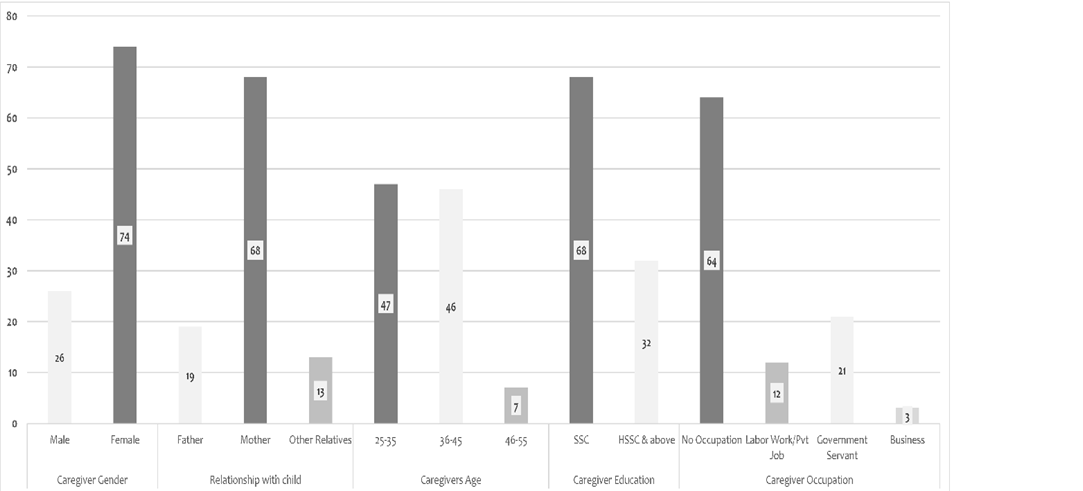
Figure 1: Frequency of demographics of Caregivers of Cerebral Palsy (n=100)
Table 1: Descriptive Statistics and Alpha-Reliability Coefficient of Variables among Caregivers of Cerebral Palsy Children (n=100)
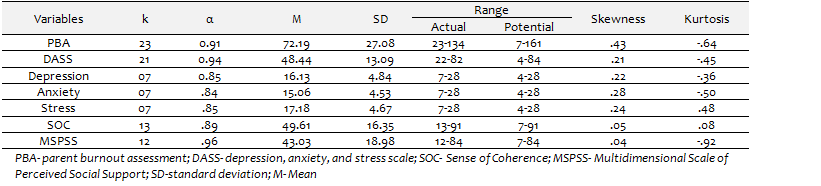
The above table 1 shows the frequency and percentage of each demographic variable of the study.
The higher parental burnout was strongly correlated with higher overall psychological distress(r=0.64), and depression(r=0.66), while had a strong negative correlation (r=-0.71) with a sense of coherence (soc) on also and moderate negative correlation (r=-0.45) perceived social support. The higher intercorrelation of depression, anxiety, and stress (r=0.77 to 0.93) was observed, indicating these constructs are closely related components and overall distress. They also had strong negative correlations of sense of coherence across depression r=-0.62, anxiety (r=-0.55), and stress (r=-0.51). The MPSS had a moderate negative correlation (r=-0.41) with distress. The MSPSS also showed a Moderate positive correlation (r=0.57) with a sense of coherence. (Table 2)
The female caregivers exhibit significantly higher than males in overall distress (p=0.01), including depression (p=0.01), anxiety (p=0.03), and stress (p=0.02). This highlights the emotional burden they experience more acutely than their male counterparts. On the other hand, no statistically significant (p=0.08) gender difference was observed, though males show a slightly stronger SOC. While male caregivers perceive significantly higher (p=0.02) social support compared to females. (table 3)
Table 2: Correlation between burnout, psychological distress, sense of coherence & social support among caregivers of Cerebral palsy children.
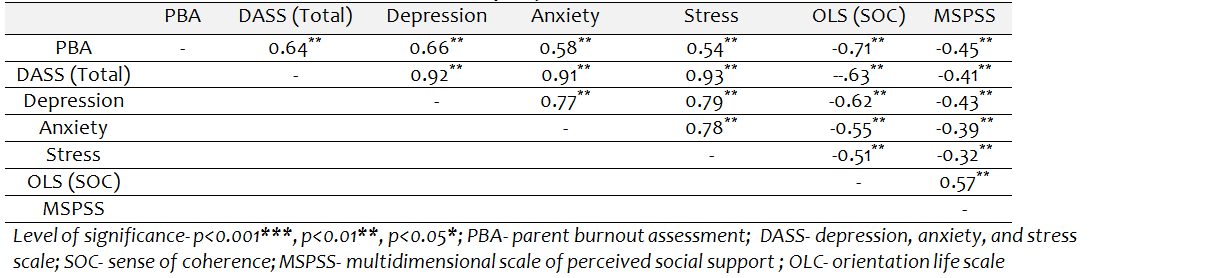
Table 3: Gender-based comparison of psychological distress (depression, Anxiety & Stress), Sense of Coherence, and Social support

The result showed that the difference between less educated and highly educated caregivers were not statistically significant (p≥0.05) regarding burnout, psychological distress (depression, Anxiety & Stress), and social support. But Sense of Coherence was significantly (p=0.03) higher in highly educated caregivers than less educated. (table 4) the indirect pathway indicates that burnout does not significantly affects {β=0.12, SE=0.04, p≥0.05, 95% CI=(0.05, 0.20) psychological distress through SOC. burnout has a significant direct effect {β=0.19, SE=0.05, p<0.05, 95% CI=(0.09, 0.29)} on psychological distress, even when SOC is included in the model. The total combined effect (direct + indirect) shows that burnout has a strong and significant {β=0.31, SE=0.037, p<0.05, 95%CI=(0.23, 0.38)} overall effect on psychological distress. (table 5)
Table 4: Comparison based on Education in caregivers
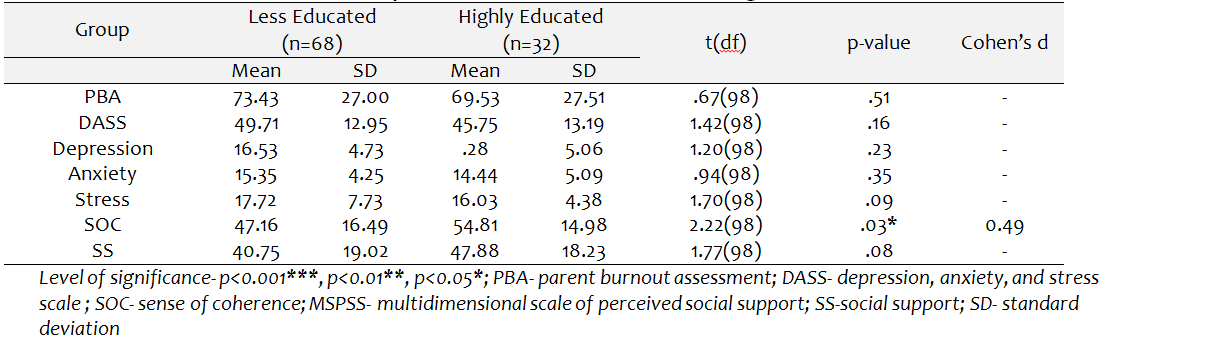

Table 5: Mediating role of sense of coherence between Burnout & Psychological Distress among caregivers of cerebral palsy children (N=100).

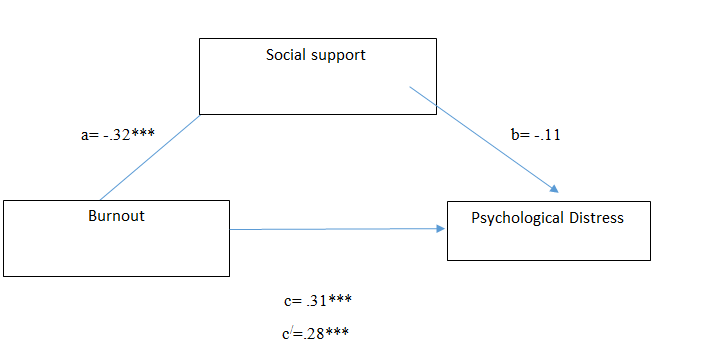
Figure 2: mediation model indicating direct, indirect paths and their significance
The model suggests that a Sense of Coherence partially mediates the relationship between burnout and psychological distress. From the above model, it can infer a partial mediation effect of social support through burnout and psychological distress, but it is not significant. (Figure 2)
The direct effect of burnout on psychological distress is a statistically significant positive relationship (β=0.28, p<0.001). However, the indirect effect suggests that social support does not mediate the significant (β=0.34, p≥0.05) relationship between burnout and psychological distress. The total effect confirmed that burnout has a strong and significant (β = 0.31, p < 0.001) impact on psychological distress among caregivers of children with cerebral palsy. (table 6)
Table 6: Mediating role of social support between burnout & psychological distress among caregivers of cerebral palsy children (N=100).

DISCUSSION
The present research was conducted on caregivers of cerebral palsy children, to determine the relationship among Psychological distress, Burnout, Sense of coherence, and social support. The current study showed a strong positive correlation between parental burnout and overall psychological distress, with higher correlations for depression and moderate correlations for anxiety and stress. These results are coherent with literature indicating that caregiving for children with disabilities often leads to emotional exhaustion and psychological strain. The prolonged caregiving responsibilities can aggravate feelings of desperation and psychological challenges in high-stress situations[15, 16]. A strong negative correlation showed that Caregivers with a higher sense of coherence (SOC) are better able to perceive caregiving challenges as comprehensible, controllable, and meaningful, decreasing burnout risks[17]. Moreover, the moderate negative correlation between burnout and perceived social support suggests that a strong social network considerably buffers the effects of caregiving stress, and that social connections provide both emotional relief and practical assistance[18].
The study also revealed a high intercorrelation among depression, anxiety, and stress, reflecting as components of overall psychological distress. This result is supported by the tripartite model of anxiety and depression, which emphasizes the shared characteristics of these states. The strong negative correlation of SOC with depression, anxiety, and stress supports its role in reducing mental health issues by adopting coping strategies[19]. Furthermore, the moderate negative correlation of perceived social support (MSPSS) with overall distress and a positive correlation with SOC, highlights social support’s mitigating effect on stress and its enhancement of SOC. By integrating these findings with existing literature, the study emphasizes the need for evidence-based practices to improve the psychological well-being of caregivers of children with cerebral palsy[20].
The study highlights notable gender differences in psychological distress, burnout, sense of coherence (SOC), and perceived social support among caregivers of children with cerebral palsy. Female caregivers demonstrated significantly higher levels of overall distress, including depression, anxiety, and stress, compared to male caregivers. The women often display an unequal emotional burden due to social expectations and their primary caregiving roles as they navigate caregiving responsibilities beside conventional social roles[21, 22, 23]. This weakness highlights the need for stress management programs and caregiver support groups to reduce distress in female caregivers[24].
While no statistically significant gender difference in SOC was observed, males demonstrated a slightly stronger SOC. Previous research suggests that males are more likely to assume problem-focused coping strategies to enhance SOC[25, 26]. Male caregivers reported significantly higher perceived social support compared to females. The studies indicate that males are more likely to utilize family and community resources, for emotional and practical support. Female caregivers may hesitate to seek such support due to cultural norms, feelings of guilt, or internalized expectations[3, 21, 23]. These findings emphasize the need for gender-sensitive caregiver support programs.
The study also revealed no significant differences between less educated and highly educated caregivers regarding burnout, psychological distress (including depression, anxiety, and stress), and social support. In contrast, a study reported that greater burden was significantly associated with lower caregiver education[27]. However, the current study found a significant difference in the sense of coherence (SOC), which was higher among highly educated caregivers. The literature suggests that education likely increases SOC by cognitive skills, problem-solving abilities, and access to information of an individual[28]. Highly educated caregivers may have a better understanding of cerebral palsy, its prognosis, and its management, enabling them to approach caregiving with a sense of control and purpose[29].
The non-significant indirect effect of burnout on psychological distress through SOC suggests that SOC may not be a key mediator in the burnout-distress pathway in this study. While SOC can be protective, its role in buffering the relationship between burnout and psychological distress may not always be prominent, particularly in high-stress caregiving situations. It is possible that coping strategies, personal resilience, and other factors, may play a more significant mediating role than SOC[30]. On the other hand, the significant direct effect of burnout on psychological distress characterized by burnout due to the emotional and physical demands of caregiving, coupled with the stress of managing the complications of CP[31]. Furthermore, the significant total effect of burnout on psychological distress highlights the crucial role of burnout in worsening caregivers' mental health.
The study found that social support did not mediate the relationship between burnout and psychological distress, suggesting unexpected results, given that social support is commonly considered a protective factor against burnout and distress[32]. One possible explanation is that caregivers may not have received adequate or effective social support, which has been shown to be a crucial factor in mitigating the negative impact of burnout[33].
Limitation: the study is likely based on the Pakistani population residents of twin cities; the findings may not be generalizable to caregivers in other regions or countries. The experience of burnout and psychological distress may differ depending on cultural norms, available resources, and healthcare systems across the country.
CONCLUSION
The study indicates that higher levels of burnout contribute to increased psychological distress. However, social support did not mediate the relationship between burnout and psychological distress, suggesting that the perceived social support might not be sufficient or effective in alleviating burnout's impact. Moreover, burnout has a strong and significant impact on psychological distress, emphasizing the need to address caregiver burnout as a key factor in reducing psychological distress in caregivers of children with cerebral palsy. To establish causal relationships, future studies should adopt longitudinal designs to track caregivers over time. Future research should also examine the physical health of caregivers in addition to their mental health, as physical strain can contribute to burnout and psychological distress.
DECLARATIONS & STATEMENTS
Author’s Contribution
SW and RM: substantial contributions to the conception and design of the study.
SW and HMMHK: acquisition of data for the study.
SW and HMMHK: analysis of the data for the study.
SW and RM: interpretation of data for the study.
SW: drafted the work.
SW, RM and HMMHK: revised it critically for important intellectual content.
SW, RM and HMMHK: final approval of the version to be published and agreement to be accountable for all aspects of the work in ensuring that questions related to the accuracy or integrity of any part of the work are appropriately investigated and resolved. All authors contributed to the article and approved the submitted version.
Ethical Statement
The research Study was conducted in the psychology department of National Institute of Rehabilitation Medicine (NIRM) Islamabad, Pakistan after approval from Executive committee (No. F.1-127/06-NIRM) in 2022.
Consent Statement
Informed consent was obtained from all subjects involved in the study.
Data Availability Statement
The data that support the findings of this study are available from the corresponding author upon reasonable request.
Acknowledgments
None to declare.
Conflicts of Interest
The authors declare no conflict of interest.
Funding
None to declare.
REFERENCES
- Kouther DA, Shakir MO, Alhumaidah RA, Jamaluddin HA, Jaha AY, Alshumrani MJ, et al. Factors influencing the mental health of caregivers of children with cerebral palsy. Front Pediatr. 2022;10:920744. [CrossRef]
- Lima MBS, Ramos EMLS, Pontes FAR, Silva SSdCJP-U. Cerebral palsy: parental stress of caregivers. 2021;26:357-68. [CrossRef]
- Syed IH, Awan WA, Syeda UB. Caregiver burden among parents of hearing impaired and intellectually disabled children in pakistan. Iran J Public Health. 2020;49(2):249-56. [PubMed]
- Koch KD, Jones BL. Supporting parent caregivers of children with life-limiting illness. Children (Basel). 2018;5(7). [CrossRef][PubMed]
- Moriwaki M, Yuasa H, Kakehashi M, Suzuki H, Kobayashi Y. Impact of social support for mothers as caregivers of cerebral palsy children in Japan. J Pediatr Nurs. 2022;63:e64-e71. [CrossRef][PubMed]
- Testani DA, Hatherly K, Csercsics A, Pajak S, Brunton LJAP. Caregiver stress and impact on children with cerebral palsy: a systematic review. 2024. [CrossRef]
- Raza HMA, Jabeen H, Ijaz A, Afzal B, Mumtaz S, Hanif HMBJIHR. Association of cerebral palsy (cp) child behavior with caregiver stress level. Int. Health rev. 2022;2(2):1-9. [CrossRef]
- Liu F, Shen Q, Huang M, Zhou H. Factors associated with caregiver burden among family caregivers of children with cerebral palsy: a systematic review. BMJ Open . 2023;13(4):e065215. [CrossRef][PubMed]
- Eloreidi RMD, Kehyayan V, Kalu F, Thornton LJJoNE, Practice. Needs of caregivers of children with cerebral palsy: A. J. Nurs. Educ. 2021;11(9). [CrossRef]
- Al-Ali T, Akour MM, Al-Masri E, Mizaghobian AAH, Ghaith S. psychological burnout among professionals working with children with motor disabilities. Psychol Russ. 2021;14(1):69-85. [CrossRef][PubMed]
- Husain W, Gulzar AJIotD, Anxiety. Translation, adaptation and validation of depression, anxiety and stress scale in urdu. Insights Depress Anxiety 2020;4(1):001-4. [CrossRef]
- Abidin FA, Fitriana E, Anindhita V, Agustiani H, Fadilah SH, Purba FD, et al. Parental burnout assessment: Validation in Indonesian parents. 'Ment. Health Prev. 2024;36:200372. [CrossRef]
- Sharif M, Zaidi A, Waqas A, Malik A, Hagaman A, Maselko J, et al. Psychometric validation of the multidimensional scale of perceived social support during pregnancy in rural pakistan. Front Psychol. 2021;12:601563. [CrossRef][PubMed]
- Naaldenberg J, Tobi H, van den Esker F, Vaandrager L. Psychometric properties of the olq-13 scale to measure sense of coherence in a community-dwelling older population. Health Qual Life Outcomes. 2011;9:37. [CrossRef][PubMed]
- Schulz R, Sherwood PR. Physical and mental health effects of family caregiving. Am J Nurs. 2008 Sep;108(9 Suppl):23-7; quiz 27. [CrossRef]
- Moosa-Tayob S, Risenga PR. Challenges of caregivers providing care to children with disabilities at non-governmental organisations in Tshwane townships, South Africa. Afr J Disabil. 2022;11:930. [CrossRef][PubMed]
- Del-Pino-Casado R, Espinosa-Medina A, López-Martínez C, Orgeta V. Sense of coherence, burden and mental health in caregiving: A systematic review and meta-analysis. J Affect Disord. 2019;242:14-21. [CrossRef][PubMed]
- George ES, Kecmanovic M, Meade T, Kolt GS. Psychological distress among carers and the moderating effects of social support. BMC Psychiatry. 2020;20(1):154. [CrossRef][PubMed]
- Stein DJ, Craske MG, Rothbaum BO, Chamberlain SR, Fineberg NA, Choi KW, et al. The clinical characterization of the adult patient with an anxiety or related disorder aimed at personalization of management. World Psychiatry. 2021;20(3):336-56. [CrossRef][PubMed]
- Poojari DP, Umakanth S, Maiya GA, Rao BK, Khurana S, Kumaran DS, et al. Effect of family-centered care interventions on well-being of caregivers of children with cerebral palsy: a systematic review. F1000Res. 2024;12:790. [CrossRef][PubMed]
- Sharma N, Chakrabarti S, Grover S. Gender differences in caregiving among family - caregivers of people with mental illnesses. World J Psychiatry. 2016;6(1):7-17. [CrossRef][PubMed]
- Pillemer S, Davis J, Tremont G. Gender effects on components of burden and depression among dementia caregivers. Aging Ment Health. 2018;22(9):1156-61. [CrossRef][PubMed]
- Pacheco Barzallo D, Schnyder A, Zanini C, Gemperli A. Gender differences in family caregiving. Do female caregivers do more or undertake different tasks? BMC Health Serv Res. 2024;24(1):730. [CrossRef][PubMed]
- Ponsoda JM, Beleña M, Díaz A. Psychological distress in alzheimer's disease family caregivers: gender differences and the moderated mediation of resilience. Healthcare (Basel). 2023;11(23). [CrossRef]
- Cholankeril R, Xiang E, Badr H. Gender differences in coping and psychological adaptation during the covid-19 pandemic. Int J Environ Res Public Health. 2023;20(2). [CrossRef][PubMed]
- O'Rourke T, Vogel C, John D, Pryss R, Schobel J, Haug F, et al. The impact of coping styles and gender on situational coping: an ecological momentary assessment study with the mhealth application trackyourstress. Front Psychol. 2022;13:913125. [CrossRef][PubMed]
- Saeed S, Malik MGR, Khan MH, Malik SAR, Aziz B. Care for the caregiver: an exploration of caregiver burden of children with chronic medical conditions at a tertiary care hospital in Karachi, Pakistan - a mixed-methods study. BMJ Open. 2024;14(5):e083088. [CrossRef][PubMed]
- Hochwälder j. Sense of coherence: notes on some challenges for future research. Sage Open. 2019;9(2):2158244019846687. [CrossRef]
- Dlamini MD, Chang Y-J, Nguyen TTB. Caregivers' experiences of having a child with cerebral palsy. A meta-synthesis. J Pediatr Nurs. 2023;73:157-68. [CrossRef][PubMed]
- Navarro Prados AB, Jiménez García-Tizón S, Meléndez JC. Sense of coherence and burnout in nursing home workers during the COVID-19 pandemic in Spain. Health Soc Care Community. 2022;30(1):244-52. [CrossRef]
- Patty NJS, van Meeteren KM, Verdonk M, Ketelaar M, Schuengel C, Willemen AM. Conceptualizing burnout from the perspective of parents of children with complex care needs. PEC Innov. 2024;5:100325. [CrossRef][PubMed]
- Ruisoto P, Ramírez MR, García PA, Paladines-Costa B, Vaca SL, Clemente-Suárez VJ. Social support mediates the effect of burnout on health in health care professionals. Front Psychol. 2020;11:623587. [CrossRef][PubMed]
- Goto Y, Morita K, Suematsu M, Imaizumi T, Suzuki Y. Caregiver burdens, health risks, coping and interventions among caregivers of dementia patients: a review of the literature. Intern Med. 2023;62(22):3277-82. [CrossRef]

Submitted
Accepted
Published
How to Cite
Issue
Section
License
Copyright (c) 2024 Saima waqar, Rabia Mushtaq , Hafiz Muhammad Manan Haider Khan

This work is licensed under a Creative Commons Attribution 4.0 International License.
Authors retain copyright and grant the journal right of first publication and allows others to share the work with an acknowledgment of the work’s authorship and initial publication in this journal. No use, distribution or reproduction is permitted which does not comply with these terms.