Association of history of concussion with vestibular impairment and cognitive function in sports athletes
DOI:
https://doi.org/10.52567/trehabj.v8i03.77Keywords:
athletes, cognition, concussion, vestibulopathyAbstract
Background: In combat sports athletes have a high incidence of concussive injuries that lead to short-term or long-term vestibular impairment and cognitive function. Understanding how concussion history impacts vestibular and cognitive functions, thereby enhancing the safety and performance of combat sports athletes.
Objective: To evaluate the association between the history of concussion with vestibular impairment and cognitive function in sports athletes.
Methodology: A cross-sectional study was conducted at Hayatabad Sports Complex in Peshawar from November 2023 to April 2024, on n=115 athletes involved in combat sports with a history of concussion within the last 30 days. The data was collected through Sports Concussion Office Assessment Tool 6 (SCOAT- 6) was used to assess Vestibular Impairment (mVOMS) and cognitive dysfunction. Regression analysis for association of History of Concussion with Vestibular and Cognitive Impairment via SPSS version 23.
Result: The mean of age of the (n=115) participants was 18.7± 2.4 years were with n=28(24.3%) mild, n=18(15.7%) moderate and n=6(5.2%) severity of concussion. There was a statistically significant (p<0.05) association between the history of concussion with vestibular and cognitive impairment on the mVOMS and Cognitive test scores on SCOAT-6.
Conclusion: The combat athlete with a history of concussion may have poor cognitive and vestibular function.
INTRODUCTION
Combat sports have a high incidence of concussive injuries among all sports, can lead to significant cognitive and vestibular dysfunction in these athletes. Concussions account for 5% to 9% of all sports-related injuries, with a higher incidence in individuals aged 12-18[1, 2]. As vestibulo-ocular function is critical for athletes, it affects their agility and ability to execute strikes effectively. It was also observed in the studies that history of concussion in these sports may contribute to vestibular dysfunction.
Vestibular dysfunction may cause impairment in spatial cognition, memory, orientation and attention. Bilateral vestibular impairment has been associated with cognitive impairment and may develop Alzheimer's disease. The studies reported that after initial concussion cognitive skills like visual and verbal memory, cognitive processing attention and executive function are significantly affected, may persist from moth to years[3, 4].
Recent studies have found that combat sport athletes exhibit a higher prevalence of oculomotor abnormalities compared to non-athletic controls, suggesting that concussion history may contribute to vestibular dysfunction. This dysfunction can manifest in symptoms such as dizziness and balance issues, which are critical for performance in combat sports [5, 6].
The correlation between vestibular and cognitive function impairments and concussion history in combat sports athletes is imperative to investigate, given the high rate of concussions in these sports and the possible long-term effects on these abilities. Decisions about returning to play and targeted rehabilitation can be influenced by knowledge of the cognitive and vestibular impairments linked to a history of concussions. To determine which athletes are at risk for future complications and to determine the best course of action for treatment, thorough evaluations of vestibular and cognitive functions in athletes with a history of concussion are also necessary. By filling in the knowledge gap regarding the effects of vestibular and cognitive functions on concussion history, the proposed study seeks to improve combat sports athletes' performance and safety.
METHODOLOGY
Study design: This was a cross-sectional study. The research was carried out in Hayatabad Sports Complex in Peshawar from November 2023 and April 2024. This study was approved by the Research and Ethical Committee (Riphah/RCRAHS-ISB/REC/MS-PT/01832). It was carried out according to the principles stated in the Declaration of Helsinki. Written informed consent was obtained from participants in the study.
Participants: Male combat athletes, aged between 18-30 years were included in the study. Moreover, participants with a history of concussion within the last month on Cantu Evidence-Based Grading System of Concussion (CEBGS-C) grade I-III were also included. For comparison, without any history of concussion within the last three months. However, participants who had concussions other than SRC and athletes who were fractured or had moderate concussions were excluded from the study.
Sample size: A total of n=115 sample size was calculated through G power, keeping effect size medium (0.14), α error margin at 0.05. To avoid β error probability, the power (1- β) was set at 0.95% and the total number of predictors was 2.
Outcome measures: In combat athletes with a history of concussion, an initial assessment was done by a sports physical therapist through Cantu Evidence-Based Grading System of Concussion (CEBGS-C) to grade the sports-related severity of concussion as mild, moderate, and severe. No loss of consciousness and post-traumatic amnesia lasts for < 30 minutes and post-concussion symptoms < 24 hours showed mild severity of concussion, Moderate concussion involved loss of consciousness <1 minute or post-traumatic amnesia > 30 minutes <24 hours or Post-concussion sign& symptom > 24 hours <7 days. Severe grade showed Loss of consciousness exceeding 1 minute, post-traumatic amnesia lasting more than 24 hours, and/or post-concussion signs & symptoms persisting for less than 7 days [7].
Sports Concussion Office Assessment Tool 6 (SCOAT 6) was used to evaluate concussion especially cognitive and vestibular impairment occurring within the first three to thirty days. SCOAT 6 includes a 10-word recall and digits backward test, blood pressure and heart rate measurements, a neurologic examination and assessment of the cervical spine, timed tandem gait as a single task and complex dual task with added three cognitive tasks, a modified vestibular ocular motor screening, delayed word recall and a mental health and sleep screen. Modified vestibular/Ocular motor screening (mVOMS) included questions about headache, dizziness, nausea, and fogginess to find out the frequencies and percentages of patients with and without VOMS symptoms while playing contact sports. For Cognitive impairment, Verbal cognitive tests were used that included questions to assess immediate memory (total score 30), Concentration (total score 4), Orientation (total score 60sec), and Delayed word recall (total score 10). The descriptive analysis of the total number of symptoms, symptoms severity score, and cognitive tests (CT) in terms of athlete’s concussion were conducted[8].
Statistical methods: The data was presented in the tables as mean±SD and n (%). The multiple linear regression test was applied. The variables were created of categorical variables. The SPSS version 23 was used for data analysis.
RESULT
The mean age of the n=115 study participants was 18.7± 2.4 years with age range of 12 (min. 14 to max 26). The frequency distribution of different type of combat athletes included in the study can be seen in figure 1. From the of n=115 athletes, majority 90 (78.3 %) have no VOMS symptoms and 25 (21.7 %) have VOMS symptoms, respectively.
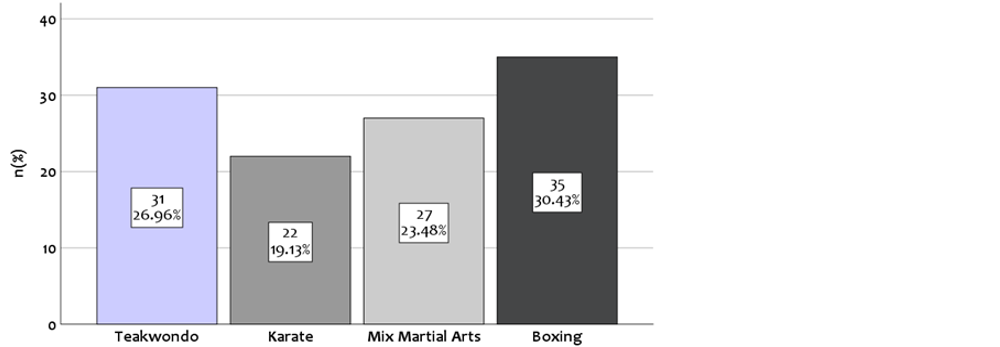
Figure 1: Types of combat sports of the participants
The mean & SD of no. of symptoms (23) and symptoms severity score (138) of the (n=115) participants was 3.1+ 3.6 and 5.7± 8.6, respectively. The mean & SD of cognitive tests i.e., Immediate memory (30), Concentration (4), Orientation (60sec) and Delayed word recall (10) of the (n=115) athletes were 14.6± 6.4, 1.3±1.2, 21.1±14 and 3.6± 2, respectively. (Table 1)
Table 1: No. of symptoms, Symptoms Severity Score and Cognitive tests of the participants (n=115)

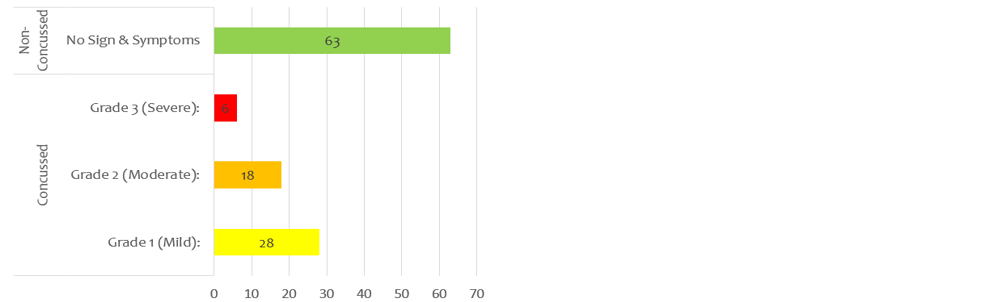
Figure 2: Severity of concussion via Cantu Evidence Base Grading System
The descriptive analysis of Severity of Concussion via Cantu Evidence Base Grading System (CEBGS) of the contact sports athletes were carried out to find the frequencies and percentages of concussion severity among contact sports athletes. Out of n=115 athletes, 52 (45.2%) have concussions in which majority 28 (24.3 %) of the athletes have grade 1-mild level of concussion sign and symptoms followed by 18 (15.7 %) have grade 2-moderate level and 6 (5.2%) have grade 3-severe level of concussion sign and symptoms, whereas, 63 (54.8%) athletes have no concussion and thus have no concussion sign and symptoms, respectively. (Figure 1)
A multiple regression model was carried out to determine the association of history of concussion with vestibular impairment and cognitive function in sports athletes. This model significantly predicted the association between history of concussion and vestibular impairment [F (113) =108.1, p<0.001]. The presence of concussion among the participants causes 48.9% (Adj. R2=.484) variance in mVOMS as compared to non-concussed athletes. There is also a significant association between history of concussion and cognitive function [F (113) =176.2, p<0.001]. The presence of concussion among the participants also causes 60.9% (Adj. R2=.606) variance in cognitive function among concussed athletes as compared to non-concussed athletes, respectively. The result also showed that as the one sample of history of concussion increases, 3.87 unit decrease in mVOMS score, which showed (p<0.001) negative significant association. For the cognition There was also significant (p<0.001) negative association, showing that the increase in one sample with history of concussion cause 36.26-unit decrease in cognitive test score. (Table 2)
Table 2: Regression Coefficients of the outcome variables

DISCUSSION
The study objective was to find the association between the history of concussion with vestibular impairment and cognitive function in sports athletes. There was a strong association showing that sports athletes with concussions had poorer Vestibular and Cognitive functions as compared to sports athletes without concussions.
Eagle et al. compared vestibular/oculomotor dysfunction among sports athletes with and without a history of concussion using the VOMS. Athletes with a concussion history in the past two years showed significantly more vestibular/oculomotor dysfunction and reported greater symptoms after vertical and horizontal saccades, vertical and horizontal VOR, and VMS tests. The study also found that dizziness, a vestibular symptom, occurs in 50-80% of concussed patients[9]. Mucha et al. reported an association between concussion history and vestibular impairment among sports athletes (P<0.05)[10]. Both studies were aligned with our study's findings on the link between concussion history and vestibular impairment in contact sports athletes. Joice C et al. found that a history of SRC significantly affects cognitive domains such as memory, executive function, and psychomotor function in concussed athletes compared to non-concussed athletes [11].
Gregory K et al. aimed to examine the association between concussion history and factors related to cognitive, behavioral, and emotional health among US high school athletes. Similarly, Alkathiry et al. compared vestibular symptoms and hypersensitivity responses in teenage athletes with and without SRC, finding worse vestibular symptoms in athletes with SRC[12].
Athletes in combat sports with a history of concussion often experience vestibular impairment and cognitive deficits due to complex pathophysiological mechanisms. Vestibular dysfunction, commonly manifesting as dizziness and vertigo, is linked to injuries in the vestibular system, particularly the inferior vestibular nerve, which can lead to prolonged recovery and worse outcomes post-concussion[13]. Cognitive impairments, such as slower processing speed and reduced cognitive flexibility, have been associated with white matter damage in critical brain regions, including the prefrontal cortex, which is essential for executive functions[14].
Additionally, the vestibular/ocular motor screening assessment reveals significant differences in vestibular function between combat athletes and healthy controls, indicating underlying vestibular and oculomotor impairments[15]. These findings suggest that the interplay between vestibular dysfunction and cognitive deficits in combat sports athletes is rooted in both peripheral and central neural injuries, necessitating a comprehensive approach to assessment and rehabilitation[16, 17].
In the current study the gender and severity of the symptoms were not studied, these both factors along with the frequency of concussion may contribute further to the results.
CONCLUSION
Cognitive and Vestibular Impairments are higher among athletes with concussions as compared to non-concussed athletes. The magnitude of concussion among combat athletes and its impact warrant further research to determine effective intervention strategies to minimize the negative impact on the athlete's health.
DECLARATIONS & STATEMENTS
Author’s Contribution
MG and NI: substantial contributions to the conception and design of the study.
MH and HMBAR: acquisition of data for the study.
NI and MMHK: analysis of the data for the study.
AA and SA: interpretation of data for the study.
MMHK: drafted the work.
MG, NI, MT, HMBAR, MMHK and MT: revised it critically for important intellectual content.
MG, NI, MT, HMBAR, MMHK and MT: final approval of the version to be published and agreement to be accountable for all aspects of the work in ensuring that questions related to the accuracy or integrity of any part of the work are appropriately investigated and resolved. All authors contributed to the article and approved the submitted version.
Ethical Statement
The data was collected from Hayatabad Sports Complex after approval from Research and Ethical Committee (Riphah/RCRAHS-ISB/REC/MS-PT/01832).
Consent Statement
Written Informed consent was obtained from all subjects involved in the study.
Data Availability Statement
The data that support the findings of this study are available from the corresponding author upon reasonable request.
Acknowledgments
None to declare.
Conflicts of Interest
None to declare.
Funding
None to declare.
REFERENCES
- Selassie AW, Wilson DA, Pickelsimer EE, Voronca DC, Williams NR, Edwards JC. Incidence of sport-related traumatic brain injury and risk factors of severity: a population-based epidemiologic study. Ann Epidemiol . 2013;23(12):750-6. [CrossRef] [PubMed]
- Taylor CA, Bell JM, Breiding MJ, Xu L. Traumatic Brain Injury-Related Emergency Department Visits, Hospitalizations, and Deaths - United States, 2007 and 2013. MMWR Surveill Summ. 2017 Mar 17;66(9):1-16. [CrossRef] [PubMed]
- Guo J, Wang J, Liang P, Tian E, Liu D, Guo Z, et al. Vestibular dysfunction leads to cognitive impairments: State of knowledge in the field and clinical perspectives (Review). Int J Mol Med. 2024;53(4). [CrossRef] [PubMed]
- Smith LJ, Wilkinson D, Bodani M, Surenthiran SS. Cognition in vestibular disorders: state of the field, challenges, and priorities for the future. Front Neurol. 2024;15. [CrossRef] [PubMed]
- Brown DA, Leung FT, Evans K, Grant G, Hides JA. Vestibular and oculomotor function in male combat sport athletes. J Sci Med Sport. 2022;25(6):524-8. [CrossRef] [PubMed]
- Neidecker J, Sethi NK, Taylor R, Monsell R, Muzzi D, Spizler B, et al. Concussion management in combat sports: consensus statement from the Association of Ringside Physicians. Br J Sports Med. 2019;53(6):328-33. [CrossRef] [PubMed]
- Patricios JS, Schneider KJ, Dvorak J, Ahmed OH, Blauwet C, Cantu RC, et al. Consensus statement on concussion in sport: the 6th International Conference on Concussion in Sport–Amsterdam, 2022. Br J Sports Med. 2023;57(11):695-711. [CrossRef] [PubMed]
- Patricios JS, Davis GA, Ahmed OH, Blauwet C, Schneider GM, Purcell LK, et al. Introducing the Sport Concussion Office Assessment Tool 6 (SCOAT6). Br J Sports Med. 2023;57(11):648-50. [CrossRef] [PubMed]
- Eagle S. Does concussion affect perception-action coupling. Clin J Sport Med . 2021. [CrossRef] [PubMed]
- Mucha A, Collins MW, Elbin R, Furman JM, Troutman-Enseki C, DeWolf RM, et al. A brief vestibular/ocular motor screening (VOMS) assessment to evaluate concussions: preliminary findings. Am J Sports Med . 2014;42(10):2479-86. [CrossRef] [PubMed]
- Cunningham J. History of sport-related concussion and long-term. J Athl Train . 2020. [CrossRef] [PubMed]
- Alkathiry AA, Kontos AP, Furman JM, Whitney SL, Anson ER, Sparto PJ. Vestibulo-ocular reflex function in adolescents with sport-related concussion: preliminary results. Sports Health . 2019;11(6):479-85. [CrossRef] [PubMed]
- Knell G, Burkhart SO, Caze TJ, Polousky JD, Kohl III HW, Messiah SE. Association between concussion history and factors relating to cognitive, behavioral, and emotional health among American high school athletes: A cross-sectional analysis. Am J Sports Med. 2020;48(10):2534-43. [CrossRef] [PubMed]
- Field M, Collins MW, Lovell MR, Maroon J. Does age play a role in recovery from sports-related concussion? A comparison of high school and collegiate athletes. J Pediatr. 2003;142(5):546-53. [CrossRef] [PubMed]
- Meehan III WP, Mannix RC, Stracciolini A, Elbin R, Collins MW. Symptom severity predicts prolonged recovery after sport-related concussion, but age and amnesia do not. J Pediatr. 2013;163(3):721-5. [CrossRef] [PubMed]
- Teramoto M, Grover EB, Cornwell J, Zhang R, Boo M, Ghajar J, et al. Sex differences in common measures of concussion in college athletes. J Head Trauma Rehabil . 2022;37(4):E299-E309. [CrossRef] [PubMed]
- Hon KL, Leung AK, Torres AR, editors. Concussion: a global perspective. Semin Pediatr Neurol.; 2019: Elsevier. [CrossRef] [PubMed]
- Knell G, Caze T, Burkhart SO. Evaluation of the vestibular and ocular motor screening (VOMS) as a prognostic tool for protracted recovery following paediatric sports-related concussion. BMJ Open Sport Exerc Med. 2021;7(1):e000970. [CrossRef] [PubMed]
- Moran RN, Covassin T, Elbin R, Gould D, Nogle S. Reliability and normative reference values for the vestibular/ocular motor screening (VOMS) tool in youth athletes. Am J Sports Med. 2018;46(6):1475-80. [CrossRef] [PubMed]
- McGroarty NK, Brown SM, Mulcahey MK. Sport-related concussion in female athletes: a systematic review. Orthop. J. Sports Med. 2020;8(7):2325967120932306. [CrossRef] [PubMed]Wallace J, Covassin T, Beidler E. Sex differences in high school athletes' knowledge of sport-related concussion symptoms and reporting behaviors. J Athl Train . 2017;52(7):682-8. [CrossRef] [PubMed]
- Büttner F, Howell DR, Doherty C, Blake C, Ryan J, Delahunt E. Clinical detection and recovery of vestibular and oculomotor impairments among amateur athletes following sport-related concussion: a prospective, matched-cohort study. J Head Trauma Rehabil .2021;36(2):87-95. [CrossRef] [PubMed]

Submitted
Accepted
Published
How to Cite
Issue
Section
License
Copyright (c) 2024 Maheen Gul, Muhammad Tariq , Hafiz Muhammad Abu Bakar Rashid , Muhammad Manan Haider Khan, Nadia Ishtiaq

This work is licensed under a Creative Commons Attribution 4.0 International License.
Authors retain copyright and grant the journal right of first publication and allows others to share the work with an acknowledgment of the work’s authorship and initial publication in this journal. No use, distribution or reproduction is permitted which does not comply with these terms.