Effects of isometric muscle training on shoulder pain, function and performance in bowlers: A randomized clinical trail
DOI:
https://doi.org/10.52567/trehabj.v9i01.92Keywords:
cricket bowlers, conventional physical therapy, disability of arm shoulder and hand (DASH), functional performance, isometric exercise, rotator cuff, scapular stabilization, shoulder pain, visual analogue scale (VAS)Abstract
Background: Overuse injuries with shoulder pain are one of the most common complaints among cricket bowlers, leading to reduced performance, and ultimately affecting an athlete's career and overall well-being. Isometric muscle training (IMT) is gaining attention as an effective intervention for musculoskeletal pain and functional performance.
Objective: To determine the effects of isometric muscle training on shoulder pain, function, and performance in bowlers.
Methods: a single-blind, randomized controlled trial was carried out from July 2023 to June 2024 on active male bowlers between the ages of 18 and 30, who suffered from pain and discomfort in the rotator cuff muscle. A total of n-36 bowlers were randomly allocated to Group A and received isometric exercises focused on shoulder flexion, extension, abduction, adduction, internal rotation, and external rotation. Group B underwent conventional physical therapy exercises, including open and closed kinetic chain shoulder exercises, active ROMs, and stretching. The Visual Analogue Scale (VAS) and Disability of Arm, Shoulder, and Hand (DASH) Questionnaire were used for pain and disability, respectively. The assessment was done at baseline, after 2nd week and 4th week.
Results: The results showed that IME had a significant effect (p<0.5) on pain reduction, functional recovery, and sports-specific performance compared to CPT except for speed (p≥0.05). The result of IME became evident from the 2nd week for pain and overall function, while in sports-related function, IME appeared significant (p<0.05) by the 4th week.
Conclusion: Isometric exercises are highly effective for managing shoulder pain and improving functional capacity in bowlers, particularly in reducing disability and enhancing sports-specific performance over time.
Clinical Trial # NCT06426875
INTRODUCTION
The shoulder is the ball and socket joints, which provide the shoulder a great range of motion but also make it more prone to injury because of its instability [1, 2]. The muscles that directly support the shoulder are the rotator cuff, which support movement, and serve as stabilizers to maintain the stability of joints. Bowling puts a lot of strain on the shoulder muscles, due to the repeated, high-intensity movements indicative of shoulder overuse and therefore induces shoulder discomfort, appropriate therapy interventions.
However, because of its complexity, the shoulder is more prone to injury, particularly while engaging in physically demanding sports like bowling [3, 4]. In bowlers’ eccentric loads placed on the shoulder muscles often lead to rotator cuff injuries, impingement syndromes, and scapular dyskinesia [5, 6]. The shoulder resilience and pain reduction related to this condition can be achieved through targeted scapular muscle stabilization training in overhead-throwing athletes [7, 8, 9].
The effects of eccentric and concentric training have been widely available in the literature [10, 11, 12], but emerging evidence suggests a positive role of isometric exercises in improving the stability of the shoulder joint and its neuromuscular control [13, 14]. Isometric exercises enhance proprioception and muscle activation, which are critical for shoulder function in high-demand sports and help in reducing pain and improve shoulder function in patients with impingement syndrome [15, 16].
Despite these findings, research examining the effects of isometric training on bowlers remains limited. Most literature results from other overhead sports, but cricketers experience different stressors on the shoulder joint, so failing to justify due to the unique biomechanics and loading patterns. So, targeted research is necessary to determine the effects of isometric muscle training on shoulder pain, function, and performance in cricket bowlers.
MATERIALS AND METHODS
Study Design: A single-blind, randomized controlled trial was carried out at the City Cricket Club in Rawalpindi, Pakistan (CCC/July/24-01). The study was approved by the research and ethical committee and completed in a year, from July 2023 to June 2024 (REC) of the Faculty of Rehabilitation and Allied Health Sciences (Ref# Riphah/RCRAHS-ISB/REC/MS-PT/01834) Riphah International University.
Selection Criteria: Non-probability convenient sampling technique was used for sample collection. Active male bowlers between the ages of 18 and 30, who suffered from subacute pain and discomfort in the rotator cuff muscle, were included in the study. On the other hand, the batsman was excluded.
Sample size: A sample size of n=36 was determined using G*Power software, assuming a small effect size (0.25) and an error rate of 0.05. To minimize the β error probability, the power (1-β) was set at 0.90. Out of n=50 patients assessed for eligibility, n=36 met the inclusion criteria and were randomly assigned to either group A (n=18), which received Isometric Exercises, or group B (n=18), which received Conventional Therapy. There were two (n=2) losses of follow-up in both groups. By the end of the study, a total of n=34 participants were analyzed. (Figure1)
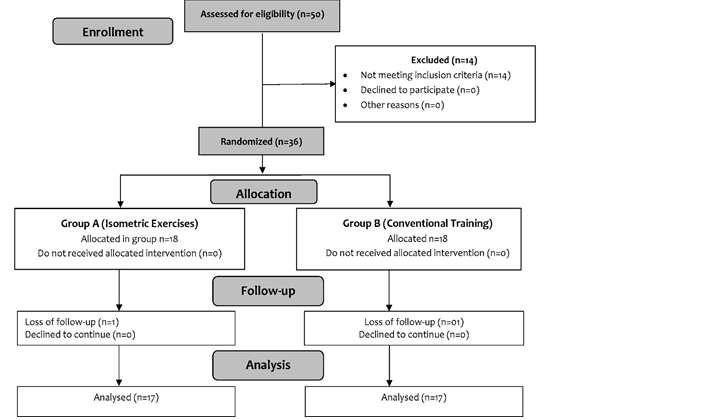
Figure 1: CONSORT Diagram
Randomization: The sealed enveloped method using a computerized random number generator (Research Randomizer) was used for randomization. The allocation at random was done out by a person that had no direct involvement in the research. Prior to the commencement of the trial, a big opaque sealed envelope containing cards with randomly picked numbers was sealed. The physical therapist opened the package and gave the patients the prescribed treatments after obtaining written informed consent. Because the evaluating physical therapist was blind to the therapies the patients underwent, the trial was conducted in a single-blinded fashion.
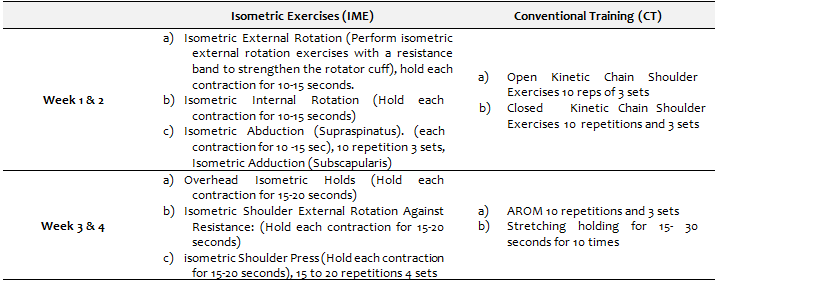
Intervention: Group A Isometric Training Group The isometric exercise program focuses on shoulder flexion, extension, abduction, adduction, internal rotation, and external rotation using TheraBands. The program is performed three times weekly, with a therapist's supervision. Participants receive correct instruction, and their development is closely evaluated for safety and effectiveness. Group B underwent conventional physical therapy exercises, including open kinetic chain shoulder exercises, closed kinetic chain shoulder exercises, active ROMs, and stretching. Open kinetic chain exercises involved shoulder presses, while closed kinetic chain exercises involved push-ups and wall push-ups. Active ROM exercises included arm circles, cross-body shoulder stretches, and doorway stretches. Participants received correct form and technique instruction throughout the intervention, and their development was closely evaluated to ensure safety and effectiveness. The protocol included arm circles, cross-body shoulder stretches, and doorway stretches. (Table 1)
Table 1: Detail Intervention Protocol
Assessment: The Visual Analogue Scale (VAS) was used to measure the pain intensity. The shoulder functions were evaluated through Disability of Arm Shoulder and Hand (DASH) Questionnaire. An Android smartphone with a high frame rate camera having ≥60 FPS was used to record the ball's motion. The BowloMetre, a bowling speed app was set up to utilize the smartphone camera and sensors to estimate speed. The distance between the bowler's release point and the batter is set to 20.12 meters, which is the usual cricket pitch length. The recordings were made in a controlled location, a cricket pitch, to exclude external influences such as wind and uneven surfaces. To guarantee constant recording settings, obtained during daytime, the Android smartphone was put on a tripod, perpendicular to the pitch and a fixed distance from the bowler's release point. Each bowler delivered 24 balls at their utmost speed to duplicate the match situation. Bowlers were asked to employ their natural bowling style without refraining from intentionally altering their speed or technique throughout the trials. The software tracked the ball's movement from the bowler's hand to the batter and calculated its speed using the formula; Speed=Distance/Time, where distance was a fixed 20.12 meters and time was the period monitored by the app.
Statistical methods: Descriptive statistics was used as mean, standard deviation, frequency, and percentages for numerical and categorical respectively. The Mixed ANOVA was conducted to determine the interaction effect between the intervention and the assessments. Between the group analyses for main effects, independent t-test and while for within-group analysis RMANOVA with pairwise comparison were used. The effect size was explained through partial eta and Cohen's d. The level of significance was set at 0.05. The SPSS Ver. 26 was used for data analysis.
RESULTS
A total of n=34 bowlers, mean age of participants was 21.3±2.26 years. Majority participants were in the normal BMI range with a mean BMI of 23.5±3.26 kg/m2.
A Mixed ANOVA was conducted to examine interaction effect of isometric muscle training and CPT on shoulder function and performance on bowlers over a 4-week period. The main effect of isometric was found to be non-significant for speed (p=0.52) and significant for VAS (F=3.53, np2=0.09, p=0.04), DASH-total (F=14.89, np2=0.3111, p<0.001), DASH-Sports (F=8.97, np2=0.219, p=0.001). (Figure 2)
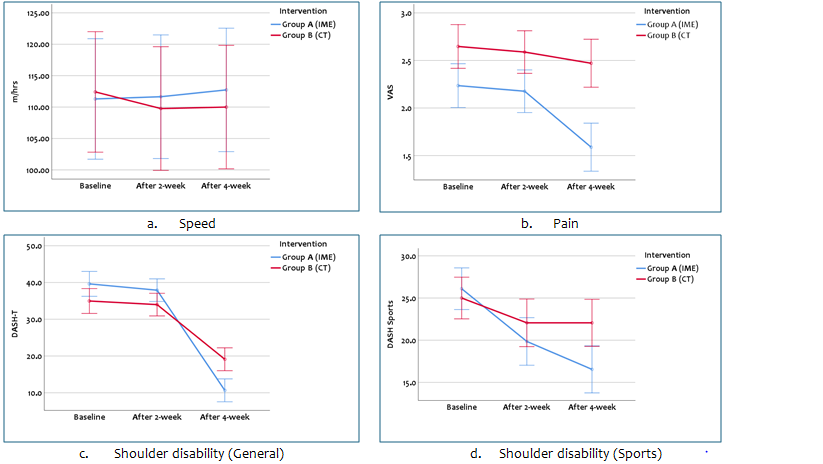
Figure 2: Interaction Effects (Intervention*Time)
The results of the repeated measures ANOVA (RMANOVA) or speed, the IME group showed a significant improvement across time points (p<0.001, ηp²=0.752), with a large effect size. The pairwise comparisons revealed a significant increase in speed from baseline to the 2nd week (p=0.018), and between the 2nd and 4th weeks (p<0.001). However, in the CT group, no significant (p=0.80) changes were observed over time.
The pain measured using the Visual Analog Scale (VAS), the IME group demonstrated a significant reduction in pain over time (p=0.003, ηp²=0.408), representing a medium to large effect. Pairwise comparison indicated significant pain reduction after the 2nd week (p=0.011). In contrast, the CPT group did not experience a significant reduction in pain over time (p=0.39).
Regarding functional disability, both the IME and CPT groups showed significant improvements over time on the Disabilities of the Arm, Shoulder, and Hand (DASH-Total) score. The IME group exhibited a highly significant reduction in disability scores (p<0.001), ηp²=0.88), indicating a very large effect size. Similarly, the CPT group also showed a significant improvement (p<0.001, ηp²=0.92), with pairwise comparison confirming significant improvements across all time points (p<0.001).
For sports-specific functional disability (DASH-Sports), the IME group showed a significant improvement over time (p<0.001, ηp²=0.64), with a large effect size. The pairwise comparison confirmed significant changes between all-time points (p<0.001). The CPT group also exhibited significant improvement (p=0.01, ηp²=0.31), indicating a moderate effect size. Pairwise comparison revealed that changes were statistically significant (p = 0.047) across all comparisons.
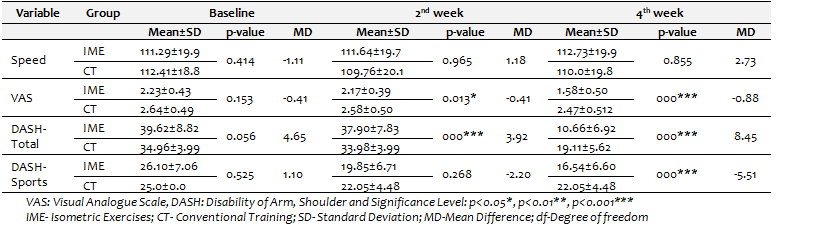
The results from the independent t-test indicate that all variables were comparable at the baseline. For speed, there was no significant difference (p≥0.05) between the Isometric (IME) and CPT groups at any time point. For pain levels by the end of 2nd week, the IME group reported significantly lower (p=0.013), pain compared to the CPT group, and the effect became more pronounced (p<0.001) by the end of 4th week, where the IME group demonstrated a highly significant reduction in pain. Regarding functional disability (DASH-Total scores), by the 2nd week, the IME group showed a statistically significant improvement (p<0.001). This trend continued by the 4th week (p<0.001) compared to the CPT group. For sports-specific disability (DASH-Sports scores), no significant difference was observed between groups at the 2nd week (p=0.26). However, by the 4th week, the IME group demonstrated a significant (p<0.001) improvement compared to CPT, suggesting that IME was more effective in improving sports-related functional outcomes in the later phase of the intervention. (Table 3)
Table 2: Repeated measure for Variables
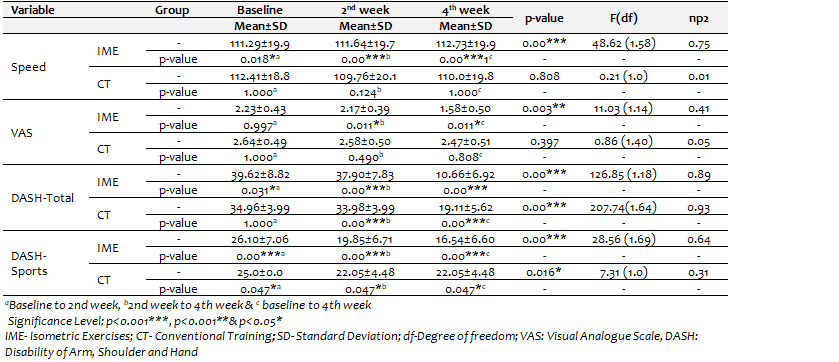
Table 3: Independent T test between groups for Speed, VAS and DASH-T and DASH-S
DISCUSSION
The study evaluated the effects of isometric muscle training on shoulder pain, functions, and speed in bowlers. The result revealed that isometric exercise (IME) and conventional training (CT) both improved in pain reduction and sport-specific function compared to conventional physical therapy (CPT). While IME did not significantly enhance bowling speed relative to CPT, it demonstrated substantial benefits in reducing pain (VAS) and improving both general (DASH-Total) and sports-related (DASH-Sports) shoulder function, particularly by the 4th week. The significant pain reduction in the IME group (p=0.003) may be attributed to neuromuscular adaptations and reduced tendon sensitization, as isometric training has been shown to modulate pain pathways in tendinopathy [17]. This aligns with studies on overhead athletes, where isometric exercises improved rotator cuff stability and reduced subacromial impingement symptoms [15, 18].
Sustained isometric exercise activates descending inhibitory pathways leading to pain relief [19]. Moreover, increases local blood flow, promoting the clearance of metabolic by-products that contribute to pain and muscle fatigue, allowing athletes to perform rehabilitation exercises more effectively without exacerbating their symptoms[20].
The superior functional outcomes (DASH-Total and DASH-Sports) in the IME group underscore its potential to enhance shoulder stability and endurance, critical for bowlers who repetitively load the shoulder during delivery. Recent researches emphasize that isometric training improves force transmission across the rotator cuff, thereby mitigating functional disability [15, 21]. In contrast, CT’s moderate effects on DASH-Sports (p=0.016) may reflect a focus on general mobility rather than sport-specific demands. Isometric exercises enhance the co-contraction of stabilizing rotator cuff muscles, improve muscular endurance and motor control, and lead to better load distribution and force efficiency, which is crucial for bowlers who require repeated high-velocity arm movements [15, 22].
The lack of speed improvement in both groups suggests that bowling speed relies on dynamic, sport-specific mechanics, which may not be directly targeted by static isometric protocols [23].
In contrast, open kinetic chain (OKC) exercises may not provide sufficient joint stability, and closed kinetic chain (CKC) exercises may lead to compensatory movement patterns that could aggravate pain or dysfunction [24]. Isometric exercises stimulate collagen synthesis, improving the resilience and capacity of tendons over time [25]. While CT including OKC and CKC exercises is valuable in later rehabilitation stages, it involves joint motion that may exacerbate symptoms in the acute phase of recovery [26].
Research indicates that isometric training strengthens the neuromuscular pathways responsible for force transmission, thereby reducing functional disability and improving sports performance [27]. In a study isometric exercises are more effective than isotonic regimens in reducing shoulder pain and improving function in athletes [15].
The short intervention period (4 weeks) and lack of kinematic analysis of bowling mechanics are limitations.
CONCLUSION
The isometric exercises are highly effective for managing shoulder pain and improving functional capacity in bowlers, particularly in reducing disability and enhancing sports-specific performance over time. These findings suggest that IME should be considered a primary rehabilitation approach for bowlers with shoulder dysfunction, particularly for those aiming for long-term improvements in pain management and functional recovery.
DECLARATIONS & STATEMENTS
Author’s Contribution
SA, RM and RU: substantial contributions to the conception and design of the study.
SR, UU, OF and MKUR: acquisition of data for the study.
UU, OF and MKUR: analysis of the data for the study.
SA and UU: interpretation of data for the study.
SA and RM: drafted the work.
SA, UU, RM, OF, RU and MKUR: revised it critically for important intellectual content.
SA, UU, RM, OF, RU and MKUR: final approval of the version to be published and agreement to be accountable for all aspects of the work in ensuring that questions related to the accuracy or integrity of any part of the work are appropriately investigated and resolved. All authors contributed to the article and approved the submitted version.
Ethical Statement
A study was carried out at the City Cricket Club in Rawalpindi, Pakistan (CCC/July/24-01). The study was approved by the research and ethical committee (REC) of the Faculty of Rehabilitation and Allied Health Sciences (Ref# Riphah/RCRAHS-ISB/REC/MS-PT/01834) Riphah International University.
Consent Statement
Written Informed consent was obtained from all subjects involved in the study.
Data Availability Statement
The data that support the findings of this study are available from the corresponding author upon reasonable request.
Acknowledgments
None to declare.
Conflicts of Interest
None to declare.
Funding
None to declare.
REFERENCES
- Culham E, Peat M. Functional anatomy of the shoulder complex. J Orthop Sports Phys Ther. 1993;18(1):342-50. [CrossRef] [PubMed]
- GC T. Functional anatomy of the shoulder. J Athl Train. 2000;35(3):248-55. [PubMed]
- Goetti P, Denard PJ, Collin P, Ibrahim M, Hoffmeyer P, Lädermann A. Shoulder biomechanics in normal and selected pathological conditions. EFORT Open Rev. 2020;5(8):508-18. [CrossRef] [PubMed]
- Kumar V. Biomechanics of the shoulder. Annals of the academy of medicine, singapore. 2002;31(5):590-2.
- Kibler WB, Stone AV, Zacharias A, Grantham WJ, Sciascia AD. Management of scapular dyskinesis in overhead athletes. Oper. Tech. Sports Med. 2021;29(1):150797. [CrossRef]
- Hadjisavvas S, Efstathiou MA, Malliou V, Giannaki CD, Stefanakis M. Risk factors for shoulder injuries in handball: systematic review. BMC Sports Sci Med Rehabil. 2022;14(1):204. [CrossRef] [PubMed]
- Schwank A, Blazey P, Asker M, Møller M, Hägglund M, Gard S, et al. 2022 bern consensus statement on shoulder injury prevention, rehabilitation, and return to sport for athletes at all participation levels. J Orthop Sports Phys Ther . 2022;52(1):11-28. [CrossRef] [PubMed]
- Moezy A, Sepehrifar S, Solaymani Dodaran M. The effects of scapular stabilization based exercise therapy on pain, posture, flexibility and shoulder mobility in patients with shoulder impingement syndrome: a controlled randomized clinical trial. Med J Islam Repub Iran. 2014;28:87. [PubMed]
- Dubé M-O, Arel J, Paquette P, Roy J-S, Desmeules F, Gagnon DH. Co-creation of an exercise inventory to improve scapular stabilization and control among individuals with rotator cuff-related shoulder pain: a survey-based study amongst physiotherapists. Arch Physiother. 2022;12(1):11. doi: 10.1186/s40945-022-00132-7. [CrossRef]
- Vetter S, Hepp P, Schleichardt A, Schleifenbaum S, Witt M, Roth C, et al. Effect of isokinetic eccentric training on the human shoulder strength, flexibility, and muscle architecture in physically active men: A preliminary study. PLoS One. 2023;18(12):e0293439. [CrossRef] [PubMed]
- Macías-Hernández SI, García-Morales JR, Hernández-Díaz C, Tapia-Ferrusco I, Velez-Gutiérrez OB, Nava-Bringas TI. Tolerance and effectiveness of eccentric vs. concentric muscle strengthening in rotator cuff partial tears and moderate to severe shoulder pain. A randomized pilot study. J Clin Orthop Trauma. 2021;14:106-12. [CrossRef] [PubMed]
- Larsson R, Bernhardsson S, Nordeman L. Effects of eccentric exercise in patients with subacromial impingement syndrome: a systematic review and meta-analysis. BMC Musculoskeletal Disorders. 2019;20(1):446. [CrossRef] [PubMed]
- Rodrigues SN, Henriques HR, Henriques MA. Effectiveness of preoperative breathing exercise interventions in patients undergoing cardiac surgery: A systematic review Rev Port Cardiol (Engl Ed) . 2021;40(3):229-44. [CrossRef] [PubMed]
- Pashaei Z, Daneshmandi H, Hosseini SMJSJoRM. Effect of eight weeks of corrective exercises on scapulohumeral rhythm, iso-metric strength of shoulder girdle muscles and functional stability in volleyball players with scapular downward rotation syndrome. J Rehabil Med . 2022;11(2):126-43. [CrossRef]
- Rodrigues da Silva Barros B, Dal'Ava Augusto D, de Medeiros Neto JF, Michener LA, Silva RS, Sousa CO. Isometric versus isotonic exercise in individuals with rotator cuff tendinopathy-Effects on shoulder pain, functioning, muscle strength, and electromyographic activity: A protocol for randomized clinical trial. PLoS One. 2023;18(11):e0293457. [CrossRef] [PubMed]
- Bolia IK, Collon K, Bogdanov J, Lan R, Petrigliano FA. Management options for shoulder impingement syndrome in athletes: insights and future directions. Open Access J Sports Med. 2021;12:43-53. [CrossRef] [PubMed]
- Rio E, Kidgell D, Purdam C, Gaida J, Moseley GL, Pearce AJ, et al. Isometric exercise induces analgesia and reduces inhibition in patellar tendinopathy. Br J Sports Med. 2015;49(19):1277-83. [CrossRef] [PubMed]
- Sharma S, Ghrouz AK, Hussain ME, Sharma S, Aldabbas M, Ansari S. Progressive resistance exercises plus manual therapy is effective in improving isometric strength in overhead athletes with shoulder impingement syndrome: a randomized controlled trial. Biomed Res Int. 2021;2021:9945775. [CrossRef] [PubMed]
- Alsouhibani A, Vaegter HB, Hoeger Bement M. Systemic exercise-induced hypoalgesia following isometric exercise reduces conditioned pain modulation. Pain Med. 2019;20(1):180-90. [CrossRef] [PubMed]
- Lauber B, König D, Gollhofer A, Centner C. Isometric blood flow restriction exercise: acute physiological and neuromuscular responses. BMC Sports Sci Med Rehabil .2021;13(1):12. [CrossRef] [PubMed]
- Augusto DD, Scattone Silva R, Medeiros Filho JF, Michener LA, Sousa CO. Rotator cuff isometric exercises in combination with scapular muscle strengthening and stretching in individuals with rotator cuff tendinopathy: A multiple-subject case report. J Bodyw Mov Ther. 2024;37:164-9. [CrossRef] [PubMed]
- Myers NL, Toonstra JL, Smith JS, Padgett CA, Uhl TL. Sustained isometric shoulder contraction on muscular strength and endurance: a randomized clinical trial. Int J Sports Phys Ther. 2015;10(7):1015-25. [PubMed]
- Zemková E. Strength and power-related measures in assessing core muscle performance in sport and rehabilitation. Front Physiol. 2022;13:861582. [CrossRef] [PubMed]
- Ng WH, Jamaludin NI, Sahabuddin FNA, Ab Rahman S, Ahmed Shokri A, Shaharudin S. Comparison of the open kinetic chain and closed kinetic chain strengthening exercises on pain perception and lower limb biomechanics of patients with mild knee osteoarthritis: a randomized controlled trial protocol. Trials. 2022;23(1):315. [CrossRef] [PubMed]
- Kjaer M, Langberg H, Heinemeier K, Bayer ML, Hansen M, Holm L, et al. From mechanical loading to collagen synthesis, structural changes and function in human tendon. Scand J Med Sci Sports. 2009;19(4):500-10. [CrossRef] [PubMed]
- Fontanier V, Vergonjeanne M, Eon P, Bruchard A, Laplaud D. Effect of open kinetic chain exercises during the first weeks of anterior cruciate ligament reconstruction rehabilitation: A systematic review and meta-analysis. Phys Ther Sport. 2025;72:95-108. [CrossRef] [PubMed]
- Oranchuk DJ, Storey AG, Nelson AR, Cronin JB. Isometric training and long-term adaptations: effects of muscle length, intensity, and intent: a systematic review. Scand J Med Sci Sports. 2019;29(4):484-503.[CrossRef][PubMed]

Submitted
Accepted
Published
How to Cite
Issue
Section
License
Copyright (c) 2025 Sheeraz Ali, Ubaid Ullah, Riafat Mehmood , Osama Faisal, Rizwan Ullah, Muhammad Khalil ur Rehman

This work is licensed under a Creative Commons Attribution 4.0 International License.
Authors retain copyright and grant the journal right of first publication and allows others to share the work with an acknowledgment of the work’s authorship and initial publication in this journal. No use, distribution or reproduction is permitted which does not comply with these terms.