A comparative analysis of resistance band versus dumbbell training on explosive strength performance of male track & field athletes
DOI:
https://doi.org/10.52567/trehabj.v8i03.60Keywords:
athletes., dumbbells, resistance band training, performance, standing broad test, vertical jump testAbstract
Background: In sports and for physical fitness capacity explosive strength is of great significance, as the players regularly require high-intensity actions as fast as possible.
Objective: to compare the effects of resistance training with resistance bands and resistance training with dumbbells on the explosive strength performance of male track & field athletes
Materials & Methods: A randomized control trial study design was used for this study, the participants were male track & field athletes, aged above 18 years and above actively involved in any competitive sports. a total of n=60 participants were equally divided into three groups i.e., Resistance band group (RBG), Dumbbells Resistance Group (DRG), and control group (CG). The vertical jump and standing board jump tests were performed to evaluate the explosive power at the baseline and after the 8th-week intervention.
Results: There was a significant difference among the groups when comparing the vertical jump (p<0.001) and standing board tests (p<0.001). The group that received resistance band and dumbbell training showed significant (p<0.05) better results than the control group in the vertical jump test. There was no significant difference between resistance band and dumbbell (p=0.215) training after the 8-week intervention. When comparing the standing board jump test, the resistance band group was significantly improved (p<0.05) than the group that received Dumbbell training and the control group. But no significant difference (p=0.234) between the control and dumbbell groups.
Conclusion: Resistance band training is a great option for increasing explosive strength. Although dumbbells are useful in strength training, bands make it easier to lift heavy weights quickly.
INTRODUCTION
Success in modern sports is the main goal for both players and coaches. To improve the physical fitness and athletic ability of both young and elite athletes, it is imperative to implement well-designed resistance training (RT) programs in addition to sport-specific training [1]. Improving muscle fitness should be the priority during the long-term athlete development program[2].
Resistance training is the specialized type of technique of conditioning where athletes are working against the resistive loads to improve fitness, health, and performance which contains the usage of machines, body weights, elastic bands, free weights, and medicine balls [3]. Resistance training can enhance performance-related variables such as maximum strength, power, force development rate, and endurance for high- and low-intensity exercises [4].
Traditional resistance training, weightlifting, and plyometric training methods are productive in improving explosive strength performance [5]. Resistance training (RT) is a well-liked technique for raising the available muscular force. It can improve muscle strength and power by affecting both the growth of the muscle and the activation of its neurons [5,6,7].
According to a study a significant relation was found between the vertical jump, which gives attention to the explosive strength of the lower limbs, and sprints in football players [8]. According to a review, resistance training utilizing elastic bands delivers equal strength improvements to traditional tools for upper and lower body muscles in participants with earlier strength training experience[9]. To enhance strength and power within two weeks, resistance band training works effectively. On the other hand power adaptation in ballistic exercises over a similar period, free weight training may be preferred[10]. A study found equal increases in leg press strength for teenage boys and girls after eight weeks of training (whole body) with free weights or elastic bands in the other trial[11].
In contrast, in a group of 30 healthy young men and women with varying stages of training knowledge, training with elastic bands alone resulted in much lower leg-muscle activation during squats than training with free weights. Thus, while conducting severe multiple-joint workouts for the lower body, they suggest using traditional equipment; nevertheless, resistance bands might be a useful training alternative [12].
Resistance training tends to enhance the explosive strength of athletes, however, research on resistance training is scarce in Pakistan, and studies comparing the effects of resistance bands and dumbbells on explosive strength are non-existent. This study aims to optimize training programs for Pakistani athletes by comparing the effects of resistance bands and dumbbell training on explosive strength performance. The findings could potentially inform future programs for athletic development and improve competitive performance in track and field events. This study aims to fill this gap by examining the efficacy of these two training modalities among male track and field athletes in Pakistan.
MATERIAL AND METHODS
The study followed a multi-cantered, open-label, parallel-group prospective randomized control trial (RCT). It was conducted from March 2021 to August 2021. The study was initially approved by the Ethics and Research Committee of the University of Lahore Institutional Review Board (IRB Number 904-IV-A). The data was collected from Peshawar Sports Complex Fitness Gymnasium Directorate General of Sports Peshawar with permission letter no. DGS/Adm/2021/3219 and Abdul Wali Khan University Mardan Fitness Gymnasium, Department of Physical Education & Sports with permission no. PES/AWKUM/2021/1085, Abdul Wali Khan University Khyber Pakhtunkhwa, Pakistan.
The male athletes aged 18 years and above, training ages above seven years, participating at Club level, and Provincial and University level athletics Competitions were included. However, those athletes participating at a professional level, injured, or who did not wish to participate were excluded. A prior written informed consent was taken before enrolment. To minimize any bias all the data was kept extremely confidential.
A pilot study was performed to calculate the effect size to calculate sample size for the main study. The effect size of the pilot study was 0.6. Considering the 0.6 effect size at an alpha level of 0.05 and with 95% power, a total of n=48 participants were required using a G*power. Hence, the selected sample size was n=48 in total, thus, in each group, 16 participants were included. Considering a potential 20% dropout in each group, n=60 participants were recruited. All participants were randomly allocated to Resistance Band Training (n=20), Resistance Training with Dumbbells (n=20), and a control group (n=20). (Figure 1)
It was a multi-centered, open-label, parallel-group prospective randomized control trial (RCT) study design. To ensure confidentiality, the athletes choose a numbered envelope from a basket. Participants were randomized on a 1:1:1 basis into three different groups. The control group continued with their routine training. Intervention group A received training with resistance bands (RBT), while intervention group B received conventional resistance training with dumbbells.
The participants who wanted to take part in the study were required to complete a written consent before enrolment. The assessment of explosive strength through the vertical jump test and standing board jump test was conducted at baseline and the end of the 8th week of intervention. Information regarding the participant’s demographic characteristics like age, weight, height, and BMI, were also collected at the baseline.
The data were collected through specific tests conducted for 8 weeks. The performance of the participants of the control group and two intervention groups was assessed at baseline and the end of week 8 by using a vertical jump test for explosive strength.
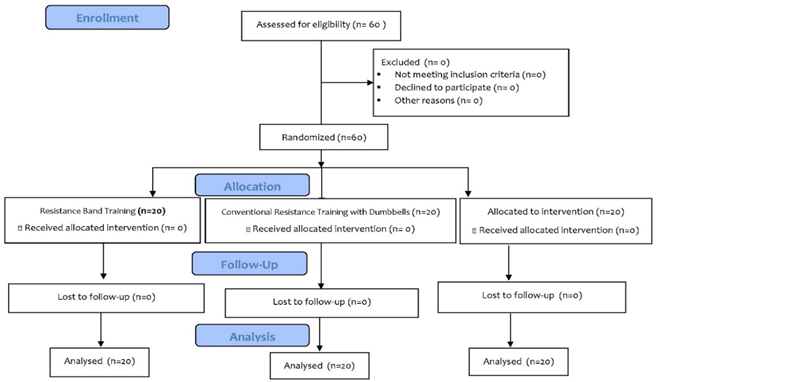
Figure 1: CONSORT diagram
Intervention: Both Groups received intervention exercises twice a week (Monday & Thursday), with 3 sets of 6-8 repetitions with a 3-minute rest in between the sets and 6-8 minutes in between each exercise from 5:00 pm to 7:00 pm after proper warm-up with easy jogging for lite cardio for 5-7 minutes, then 8-10 minutes stretching (passive and dynamic stretching), then for specific warm-up, use with resistance bands and dumbbells for resistance training, 2-3 sets of 3-4 repetitions of half squats, lunges, deadlifts and, hip thrust exercises with lite weight. After warm, each exercise was completed in approximately 30 to 35 seconds. The rest interval between exercises was 1:3 work/rest ratios (60:180 seconds). One week before starting the study, the participants learned the techniques for the exercises with elastic resistance bands and dumbbells and were trained to perform every exercise with the appropriate technique. All participants were guided to execute every repetition with concentric to eccentric phase with a ratio of 1:2 (1 repetition in 3 seconds, one second for the concentric stage and two seconds for the eccentric stage).
Resistance Band Training (RBT) Group (A) was given treatment in terms of elastic resistance band training exercises (half squats, deadlifts, lunges, lateral lunges, hip thrust) using resistance bands for 8 weeks. The investigator used a pack of 5 resistance bands with different colors, widths, and resistance levels with progressive loading, (Yellow 8-15lbs, Green 15-35lbs, Blue 20-45lbs, Orange 25-50lbs, Purple 30-60lbs, with 208cm (6.8 feet) circumference and 4.5mm thickness). The researcher used yellow for the first week, green for the second and third weeks, blue for the fourth and fifth weeks, orange for the sixth and seventh weeks, and purple for the eighth week. (table 1)
Conventional Resistance Training with Dumbbells (CRT) group (B) was given during half squats, deadlifts, lunges, lateral lunges, hip thrust for 8 weeks. The weight of the dumbbells in kg was estimated according to the mean of tension (minimum and maximum value) of the resistance bands. Below is the table for comparing the approximate weight of the dumbbells with the tension of the resistance bands. (Table 1)
Table 1: Comparison of the resistance band tension and dumbbell weight

The control group (C) was allowed to follow their routine training schedule during the period of the study and no additional treatment was given to them.
Outcome measure & Instrument: A vertical jump test was used to measure the lower body explosive strength (legs muscular power (vertical). The Vertec device (Apollo Sports, Lahore) is designed to measure explosive strength performance[13]. Rather than being positioned after a wall and requiring chalk or color to mark, this device includes colored plastic spinning vanes prepared in half-inch increments related to a telescopic (metal/ plastic) pole that can be adjusted to the participant's status obtained. To measure the leap peak, a two-footed step leap method was used. While performing the vertical jump test, the participants were told to jump and displace the colored plastic spinning vanes. Participants were given three trials. The maximum jump height achieved among the trials was recorded. Rest time after each attempt was 2 - 3 minutes.
The Standing Board Jump test is used to examine the (leg's explosive strength). The participants leap into a sand pit (landing area for long jump) from a standing position, toes on the edge of the sand pit (landing area for long jump (horizontal). Crouching down, using their arms and legs to jump horizontally as far as possible and land with both feet on the sandpit. The distance was recorded and measured from the beginning of the edge of the sand pit to the nearest mark made by the participants in the landing area. The participants repeated the trial three times. The assistant used the best-recorded distance. To assess the participant's explosive strength the distance of the best attempt was used for the evaluation purpose. To conduct this test, the researcher arranged to be located beside a sand pit and a tape to measure the distance jumped and an assistant.
Data were analyzed statistically using Statistical Package for Social Sciences (SPSS) version 22. The normality of data was assessed by using the Shapiro-Wilk test. As the normality of the data was assumed, ANOVA with post-hoc Tukey analysis was used to compare the statistical differences among the groups for explosive strength. While for with-in group changes pairing the sample t-test was applied. The level of significance was set at p<0.05.
RESULTS
The mean age of the participants was 21.250 ±2.442 years, height 173.503±15.956 cm, weight 71.167±4.681 kg, training age 4.75±1.48, 4.75±1.62, 4.2±1.39 respectively. The group wise distribution of these variables and athletes’ qualification can be seen in table 2.
Table 2: Demographic characteristics of participants (n=60)
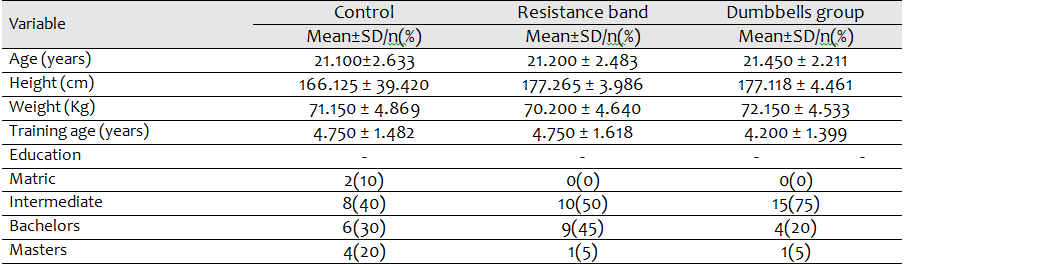
Table 3: Baseline Values of Vertical Jump Test & Standing Board Jump

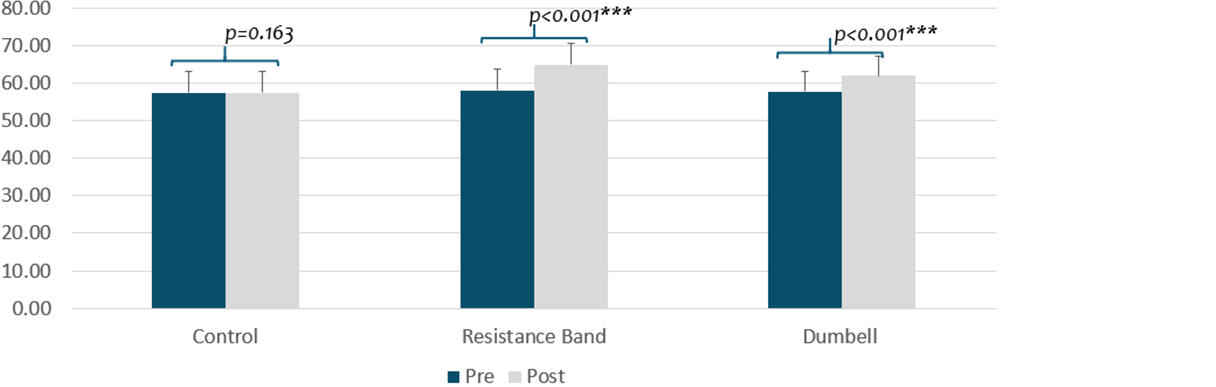
Figure 2: Pre-Post analysis (Vertical Jump Test)
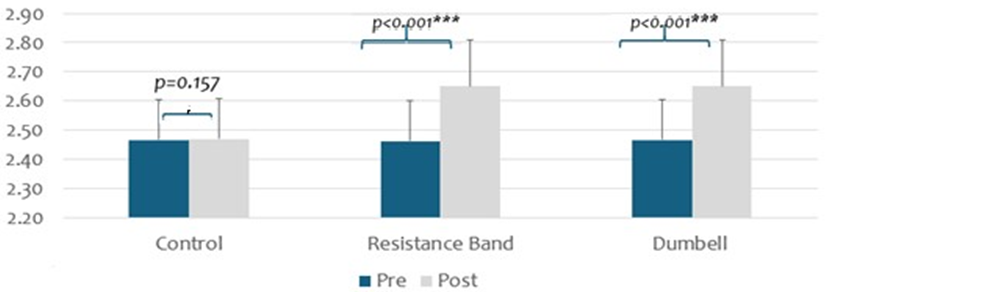
Figure 3: Pre-Post analysis (Standing Board Jump Test)
The paired sample t-test showed that vertical jump and standing board jump tests in all groups were significantly improved (p<0.001) after 8-week intervention except control group in which no significant change in vertical jump (p=0.157) and standing board tests (p=0.163). (Figure 2&3)
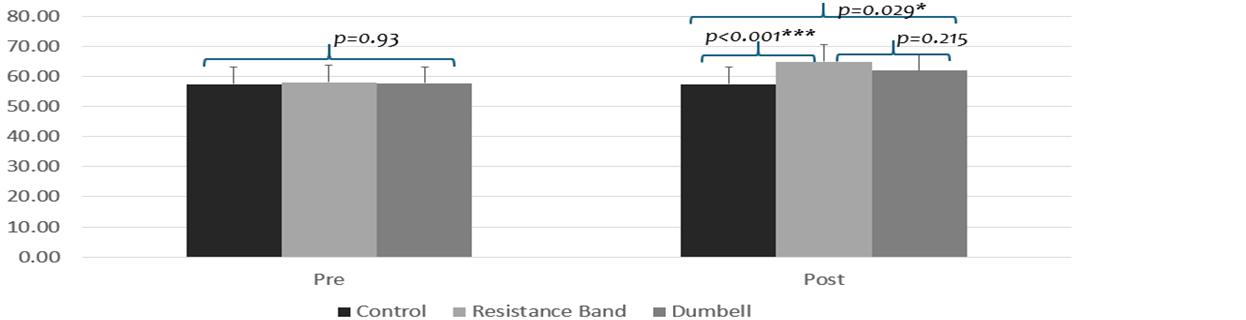
Figure 4: Comparison among the groups (Vertical Jump Test)
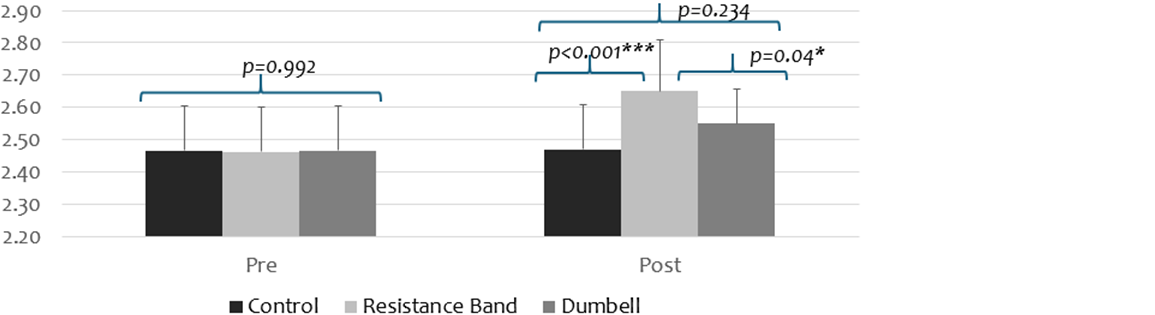
Figure 5: Comparison among the groups (Standing Board Jump Test)
All three groups were comparable (p≥0.05) at the baseline regarding vertical jump and stand jump test. (table 3) After intervention One Way ANOVA showed that There was significant difference among the group when comparing the vertical jump {F=9.49(2,57), p<0.001, ηp2= 0.25} and standing board tests {F=8.73(2,57), p<0.001, ηp2= 0.235}. The Tukey post hoc analysis showed that the group received resistance band (64.90±5.58) and dumbbell (61.95±5.28) training showed significant (p<0.05) better results as compared to control group (57.40±5.59) in vertical jump test. While no significant difference between resistance band and dumbbell (p=0.215) training after 8-week intervention. When comparing the standing board jump test results across different groups, the resistance band group (2.64±0.15) showed a significant improvement (p<0.05) compared to both the dumbbell training group (2.54±0.10) and the control group (2.46±0.13). But no significant difference (p=0.234) between control and dumbbell group. (Figure 4&5)
DISCUSSION
The study objective was to compare the effects of resistance training with resistance bands and resistance training with dumbbells on the explosive strength performance of male track & field athletes. On vertical jump test (VJT) and standing board jump test (SBJT). The results revealed that although both groups showed improvement in explosive strength, the resistance band group showed more significant improvement on VJT and SBJT than conventional by training with dumbbells. Greater neuromuscular coordination is required for the successful application of explosive movements. These explosive movements can be enhanced through training with resistance bands. Resistance bands can easily applied to a variety of workouts that engage multiple muscle groups, can be adapted easily, and enable athletes to improve actions, particularly to their selected activity, and enhance their performance on the track [14].
A vital strategy for improving lower limb explosive strength in track & field athletes is traditional resistance training with dumbbells, which includes exercises like lunges, deadlifts, and squats. All these exercises enhance dynamic movements by developing muscular activation and stimulating growth. Conventional resistance training with dumbbells can be improved to duplicate the unique biomechanics of an athlete's selected sport, which maximizes athletes' performance. In addition, it permits unilateral training, which helps balance out asymmetries and enhances general stability, which are both essential for explosive movements on track and field [15,16].
Multiple mechanisms are involved in the enhancement of the lower limb's explosive strength by using resistance bands better than dumbbell training. During movement, at the end of the range of motion, where muscles are usually stronger, resistance bands enable muscles to work harder with varied resistance loads, that rise as the band stretches. This promotes muscle activation and strength growth across the whole range of motion, a primary requirement for explosive actions like sprinting and jumping. Moreover, bands keep the muscles involved all the time during movement, in contrast to dumbbell training, where resistance changes depending on joint angle and gravitational force. Improved muscular activation and endurance are the results of this ongoing engagement, and this is crucial for developing explosive strength[9, 17].
Naturally, bands are elastic, and generate an elastic recoil effect that impacts the muscle's stretch-shortening cycle (SSC), which is essential for quickly loading and releasing energy during explosive movements. Resistance band training simulates natural force patterns of muscles in sports and increases an athlete's capability to produce force quickly and effectively by requiring them to accelerate and decelerate against resistance. This exercise improves speed, agility, and neuromuscular coordination [18]. Compared to the isolated muscle movements with dumbbell training, the resistance bands allow for muscle movements, that better mimic athletic activities and can be tailored to specific sports, leading to improved performance on the field. Furthermore, resistance bands do not rely on gravity to provide force, thus putting less stress on joints which ultimately reduces the chances of muscle injuries, which helps in promoting regular and long-term strength increase [9].
Additionally, because bands have less stress on joints, there is a decreased chance of joint injuries, which promotes more regular training and superior long-term strength increases. Using bands improves proprioception and stability, which helps sustain the appropriate form and maximize force during explosive actions. On the other hand, the slow force-velocity relationship, heavy resistance training with conventional weights like dumbbells, does not affect acceleration and power immediately[19]. Therefore, the "sticking point" (a specific stage or point in a movement where an athlete has difficulties or short stoppage in their workout) explains the consequent load which influences speed and the construction of power because of the tension of length and force-velocity association [20, 21]. This training might be useful for strength improvement but is inappropriate for producing strength, which involves speedy action through a full range of movements [12].
Comparing resistance band training with traditional dumbbell training, these combined effects make resistance band training particularly useful for building explosive strength. With the constant, changing resistance of bands, rather than the sticking spots and slower velocity of heavy weightlifting, the development of speed and power required for explosive motions is better supported.
CONCLUSION
Resistance band training is a great option for increasing explosive strength. Although dumbbells are useful in strength training, bands provide special advantages. The resistance bands make it easier to lift heavy weights quickly. These bands let the athlete gradually increase in difficulty as they stretch the bands, making the natural tension throughout the entire movement in the muscle’s development and explosive power. Compared to traditional resistance training equipment, resistance bands are more affordable, user-friendly, portable, and simpler to incorporate into routine training sessions. A future study is needed to compare the gender-based differences in explosive strength as these exist.
DECLARATIONS & STATEMENTS
Author’s Contribution
MS, MKM, I, and SA: substantial contributions to the conception and design of the study.
MS, I: acquisition of data for the study.
MS and MKM: analysis of the data for the study.
MS, MKM and SA: interpretation of data for the study.
MS: drafted the work.
MS, MKM, I and SA: revised it critically for important intellectual content.
MS, MKM, I, and SA: final approval of the version to be published and agreement to be accountable for all aspects of the work in ensuring that questions related to the accuracy or integrity of any part of the work are appropriately investigated and resolved. All authors contributed to the article and approved the submitted version.
Ethical Statement
The study was approved by the Ethics and Research Committee of the University of Lahore Institutional Review Board (IRB Number 904-IV-A). The data collected from Peshawar Sports Complex Fitness Gymnasium Directorate General of Sports Peshawar with permission letter no. DGS/Adm/2021/3219 and Abdul Wali Khan University Mardan Fitness Gymnasium, Department of Physical Education & Sports with permission no. PES/AWKUM/2021/1085, Abdul Wali Khan University Khyber Pakhtunkhwa, Pakistan.
Consent Statement
Informed consent was obtained from all subjects involved in the study.
Data Availability Statement
The data that support the findings of this study are available from the corresponding author upon reasonable request.
Acknowledgments
None to declare.
Conflicts of Interest
The authors declare no conflict of interest.
Funding
None to declare.
REFERENCES
- Zouita A, Darragi M, Bousselmi M, Sghaeir Z, Clark CC, Hackney AC, et al. The effects of resistance training on muscular fitness, muscle morphology, and body composition in elite female athletes: A systematic review. Sports Med. 2023;53(9):1709-35. [CrossRef] [PubMed]
- Lloyd L, Langley-Evans S, McMullen S. Childhood obesity and risk of the adult metabolic syndrome: a systematic review. Int J Obes. 2012;36(1):1-11. [CrossRef] [PubMed]
- Reid N, Dawe S, Harnett P, Shelton D, Hutton L, O’Callaghan F. Feasibility study of a family-focused intervention to improve outcomes for children with FASD. Res Dev Disabil. 2017;67:34-46. [CrossRef]
- James LP, Suchomel TJ, Comfort P, Haff GG, Connick MJ. Rate of force development adaptations after weightlifting-style training: the influence of power clean ability. J Strength Cond Res. 2022;36(6):1560-7. [CrossRef] [PubMed]
- Berton R, Lixandrão ME, Pinto e Silva CM, Tricoli V. Effects of weightlifting exercise, traditional resistance and plyometric training on countermovement jump performance: a meta-analysis. J. Sports Sci. 2018;36(18):2038-44. [CrossRef] [PubMed]
- Frost DM, Bronson S, Cronin JB, Newton RU. Changes in maximal strength, velocity, and power after 8 weeks of training with pneumatic or free weight resistance. J Strength Cond Res. 2016;30(4):934-44. [CrossRef] [PubMed]
- Katushabe ET, Kramer M. Effects of combined power band resistance training on sprint speed, agility, vertical jump height, and strength in collegiate soccer players. International Int. J. Exerc. Sci. 2020;13(4):950. [PubMed]
- Zileli R, Söyler M. The examination of the relationship between sprint and vertical jump in soccer players. MANAS Sosyal Araştırmalar Dergisi. 2021;10(1):485-91. [CrossRef]
- Lopes JSS, Machado AF, Micheletti JK, de Almeida AC, Cavina AP, Pastre CM. Effects of training with elastic resistance versus conventional resistance on muscular strength: A systematic review and meta-analysis. SAGE Open Med. 2019;7:2050312119831116. [CrossRef] [PubMed]
- Loturco I, Pereira LA, Reis VP, Zanetti V, Bishop C, McGuigan MR. Traditional free-weight vs. variable resistance training applied to elite young soccer players during a short preseason: effects on strength, speed, and power performance. J Strength Cond Res. 2022;36(12):3432-9. [CrossRef] [PubMed]
- Lubans DR, Aguiar EJ, Callister R. The effects of free weights and elastic tubing resistance training on physical self-perception in adolescents. Psychol. Sport Exerc. 2010;11(6):497-504. [CrossRef]
- Iversen VM, Norum M, Schoenfeld BJ, Fimland MS. No time to lift? Designing time-efficient training programs for strength and hypertrophy: a narrative review. Sports Med. 2021;51(10):2079-95. [CrossRef] [PubMed]
- Rodríguez-Rosell D, Mora-Custodio R, Franco-Márquez F, Yáñez-García JM, González-Badillo JJ. Traditional vs. Sport-Specific Vertical Jump Tests: Reliability, Validity, and Relationship With the Legs Strength and Sprint Performance in Adult and Teen Soccer and Basketball Players. J Strength Cond Res. 2017;31(1):196-206. [CrossRef] [PubMed]
- Novak D, Loncar I, Sinkovic F, Barbaros P, Milanovic L. Effects of plyometric training with resistance bands on neuromuscular characteristics in junior tennis players. Int J Environ Res Public Health. 2023;20(2):1085. [CrossRef] [PubMed]
- McQuilliam SJ, Clark DR, Erskine RM, Brownlee TE. Free-weight resistance training in youth athletes: a narrative review. Sports Med. 2020;50(9):1567-80. [CrossRef] [PubMed]
- Liao K-F, Nassis G, Bishop C, Yang W, Bian C, Li Y-M. Effects of unilateral vs. bilateral resistance training interventions on measures of strength, jump, linear and change of direction speed: a systematic review and meta-analysis. Biol. Sport. 2022;39(3):485-97. [CrossRef] [PubMed]
- Andersen V, Fimland MS, Kolnes MK, Saeterbakken AH. Elastic bands in combination with free weights in strength training: neuromuscular effects. J Strength Cond Res. 2015;29(10):2932-40. [CrossRef] [PubMed]
- Seiberl W, Power GA, Herzog W, Hahn D. The stretch‐shortening cycle (SSC) revisited: residual force enhancement contributes to increased performance during fast SSC s of human m. adductor pollicis. Physiol. Rep. 2015;3(5):e12401. [CrossRef] [PubMed]
- Chang N-J, Hung W-C, Lee C-L, Chang W-D, Wu B-H. Effects of a single session of floss band intervention on flexibility of thigh, knee joint proprioception, muscle force output, and dynamic balance in young adults. Appl. Sci. 2021;11(24):12052. [CrossRef]
- Clark RA, Bryant AL, Humphries B. A comparison of force curve profiles between the bench press and ballistic bench throws. J Strength Cond Res. 2008;22(6):1755-9. [CrossRef] [PubMed]
- Van Den Tillaar R, Ettema G. A comparison of successful and unsuccessful attempts in maximal bench pressing. Med Sci Sports Exerc. 2009;41(11):2056-63. [CrossRef] [PubMed]

Submitted
Accepted
Published
How to Cite
Issue
Section
License
Copyright (c) 2024 Muhammad Shah, Dr. Mohibullah Khan Marwat

This work is licensed under a Creative Commons Attribution 4.0 International License.
Authors retain copyright and grant the journal right of first publication and allows others to share the work with an acknowledgment of the work’s authorship and initial publication in this journal. No use, distribution or reproduction is permitted which does not comply with these terms.