Comparison of perception of academic stress among medical and non-medical students
DOI:
https://doi.org/10.52567/trehabj.v8i03.66Keywords:
perceived academic stress, medical students, undergraduate students, non-medical students, academic, physical therapy students, arts studentsAbstract
Background: Undergraduate students from all fields of study are under constant perceived stress due to workload, and their perceptions about academic success. Determining the difference in the perception of Academic stress to cope with it.
Objective: To determine the differences in perceptions of academic stress among medical and non-medical undergraduates.
Materials and Methods: In this comparative cross-sectional study, data was collected through a stratified sampling technique from undergraduate medical (n=200) and non-medical (n=200) students. This research included male and female undergraduate students with a minimum of 50% attendance. Data was collected through the Perception of Academic Stress Scale (PASS) to measure the perception of academic stress. An online structured questionnaire was shared through a communication media platform and data analysis was made through SPSS version 27.
Results: There were n=179 male undergraduates and n=221 female undergraduate students. The overall PASS score showed no significant difference (p≥0.05) in Perceived Academic stress in Medical and Non-Medical Undergraduate students and between male and female students.
Conclusions: This study found moderate level of Perceived academic stress to be the most prevalent with no significant difference in the perception of academic stress between medical and non-medical students. Additionally, it showed that male and female students experienced similar levels of academic stress.
INTRODUCTION
Stress is an unavoidable aspect of student life, influenced by various academic and non-academic factors. Academic stress is defined as the body's response to academic-related demands that exceed the adaptive capabilities of students[1]. Perceived academic stress is the state in which we perceive that everything has become overwhelming feeling overloaded and questioning our ability to handle the pressures placed upon us[2]. Academic stress is possibly the most important source of stress affecting the psychological health of college students[3].
Heavy course loads, intense study schedules, and competition among members contribute significantly to academic stress[4,5,6,7]. Additionally, non-academic influences, including socio-cultural expectations and psychological challenges, play a crucial role, particularly as students adjust to new environments. Parental expectations further exacerbate the situation, often placing high demands on students that can lead to anxiety and distress[8, 9]. Gender roles also impact students' experiences of stress. Boys typically enjoy greater freedom, while girls often face the challenge of balancing their academic responsibilities with familial roles, such as being daughters, sisters, or even wives. This disparity can create additional pressure on female students, complicating their academic journey[10].
Research highlights the prevalence of stress among medical students, with studies indicating that between 63% and 72% report experiencing perceived academic stress, and a significant portion suffers from severe stress[1, 11, 12]. In contrast, non-medical students show lower number in levels of stress, with only about 7.5% reporting high perceived academic stress, and no significant differences in stress levels between male and female non-medical students[13]. These findings underscore the complexity of stress in student populations and the importance of implementing effective support systems to help them navigate these challenges.
The rationale for comparing the perception of academic stress between medical and non-medical students is grounded in the existing literature, which predominantly focuses on the prevalence of stress among medical students. While there is substantial research detailing the stress levels experienced by medical students, there is a noticeable gap in studies that directly compare these levels with those of non-medical students, particularly in an international context and within Pakistan. This comparative analysis is essential to understand how academic stress manifests differently across various fields of study.
METHODOLOGY
Study design: This is a comparative cross-sectional study conducted in Sialkot on undergraduate medical and non-medical students after the approval from the Research ethical committee of the University of Sialkot with FAHS/REC Letter-00033, from October 23, 2023, to February 20, 2024.
Selection criteria: This research included male and female undergraduate students with a minimum of 50% attendance. Students taking anticonvulsants, antidepressants, stimulants, and with diagnosed chronic diseases were excluded.
Sample size: Sample size was calculated using Raosoft by using a confidence interval of 95% and 5% margin of error and 30000 as population size, giving us n=385 as sample size. To make 2 strata for medical and non-medical students, this number was rounded off to n=400 including n=200 medical and n=200 non-medical students.
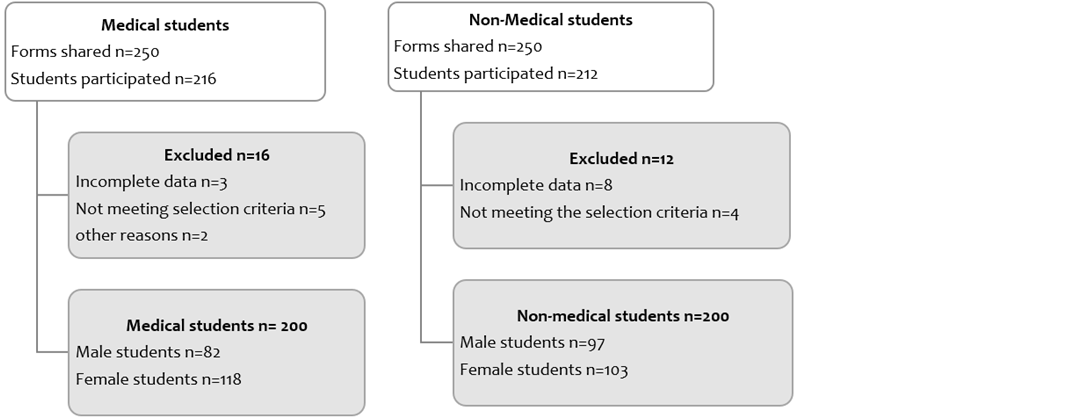
Figure 1: Flowchart representing Data collection process for the study
The data collection was done using cluster sampling by dividing students into clusters of medical and non-medical institutes. Clusters were formed within the strata to locate the students. Data from students obtained by access then in classes, by Google forms shared through social media platforms i.e. Facebook, Twitter, and Instagram. A total of n=428 students participated out of which n=107 students participated through Google Forms, and included n=216 medical students and n=212 Non-Medical students.
Outcome measures: Demographic factors were assessed using questions including age, gender, program of study, academic year, estimated percentage of attendance, any disease they are suffering from, and any sort of medications or drugs they have been using. The standardized 18-item (Cronbach’ α=0.70) perception of Academic Stress Scale (PASS)was used to measure perceptions, academic stress, and its sources in students. The score ranges from 18-90 on 5 point Likert scale indicating a low score as high stress and a high score as low stress, with low stress ranges between 67-90, moderate stress between 42-66, and high stress between 18-41. [14, 15]. The negatively stated items 6 to 18 are reversed by coding to match the results so that a higher score indicates a low level of stress and vice versa. The factor of Academic Self Perceptions is measured using four items. Time restraints are measured by five items, pressure to perform is measured by 5 items while Perceptions of workload are measured by 4 items[8].
The data was analyzed using an independent t-test for overall comparison of medical and nonmedical students, as well as for gender differences in both clusters. Moreover, One-way ANOVA was also used to compare the PSS on the basis study year of the participants. To determine the effect size Cohen’s d for Independent t-test. The SPSS version 27 was used for data analysis.
RESULTS
The mean Age of Participants was 21.49±1.68 with n=221(55.3%) female students and n=179(44.8%) male students from different fields of study, pursuing under-graduation in various universities.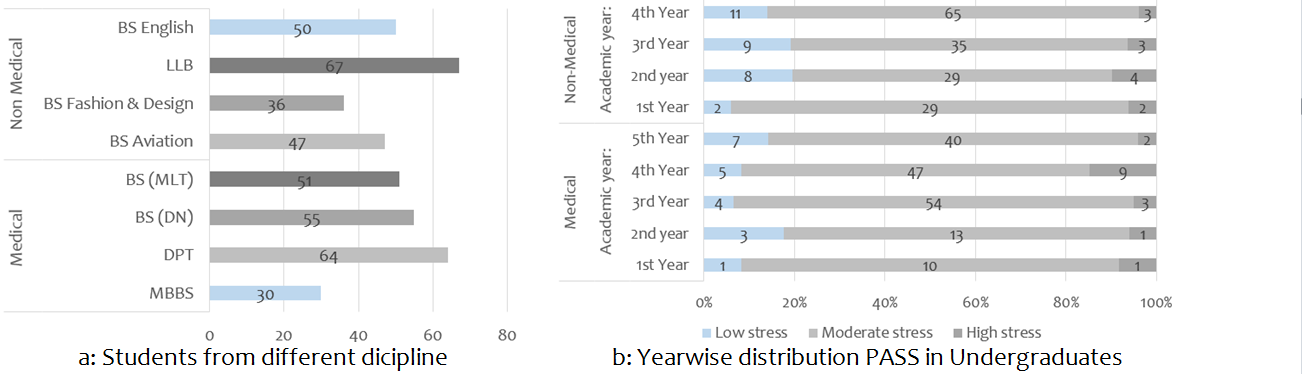
Figure 2: discipline wise abd PASS Frequency distribution of Undergraduates
Figure 2a includes the frequency distribution of students from different medical and non-medical disciplines. The yearwise distribution of Perceived academic stress in medical and Non-Medical students can be seen in Figure 2b.
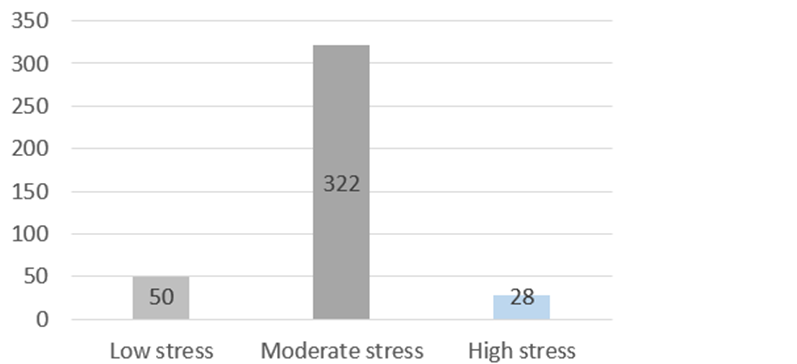
Figure 3: Overall frequency distribution of PASS
High levels of perceived Academic stress were present in n=16 medical students and n=12 non-medical students. A moderate level of Perceived academic stress was found in n=164 medical students and n=158 non-medical students while a low level of perceived academic stress was found in n=20 medical students and n=30 n0n-medical students. The overall distribution can be seen in Figure 3.
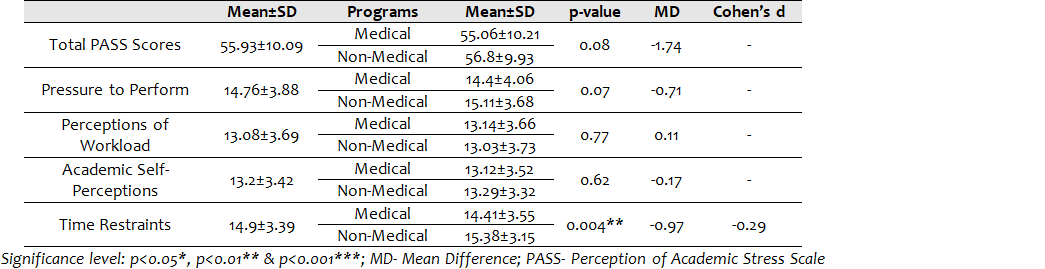
There is no significant difference (p≥0.05) in the total PASS scores as well as individual domains between the medical and non-medical students, except for the time constraint where medical students showed significant time constraint (p=0.004) with a small effect size (Cohen’d=0.29) as compared to nonmedical students. (Table 1)
Table 1: Perceptions of academic stress between medical and non-medical undergraduates student
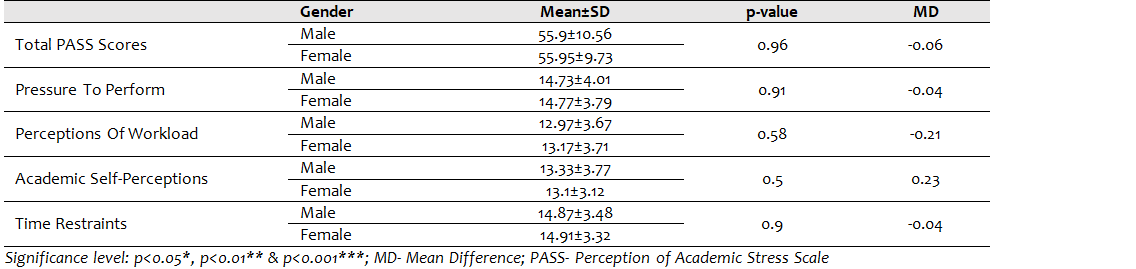
Regarding the gender differences, no significant difference (p≥0.05) was observed in the total PASS scores as well as its domains between Male and female students. (Table 2)
Table 2: Compare of Means of perceptions of academic stress between male and female students.
DISCUSSION
The primary objective of our study was to compare the perception of academic stress in students of two different departments of medical and non-medical.
The results of this study indicate that there was no significant difference in the Perception of Academic Stress between Medical and Non-Medical students based on total PASS scores as reported in previous studies[11, 16] which stated that there is no particular difference in perception of academic stress in both the population. Contrasting results were also seen in literature [9, 17, 18] that there is a significant difference in perceptions of Academic stress among medical and non-medical students and that medical students had higher levels of perceived stress. And contrasted with a study [19] where medical students had high stress due to these factors. These disparate outcomes could be explained by variations in the study's design, evaluation methods, and study population's demographics[14]. Study setting included students from only one city and most of them were studying in the university environment which uses the semester system in which time restrictions are similar and other factors including workload and performance pressure are also equal on students from all faculties.
This study also indicates that there was no significant difference in the total PASS scores among Male and Female Undergraduate students favored by previous studies [14], while another study [8] had results different from the findings of the current study where male students had a higher perception of Academic stress. Few other studies [1] [20] [17, 21, 22] have revealed that females have a higher level of perception of Academic stress because they had female participants in the majority. Some studies explain this difference due to traveling restrictions on females in most Arab countries. This may be due to the fact that males and females both are career-oriented in this era in order to secure their future and also due to the environment and management practices of the universities[14]. So, Male and female students have no significant difference in their perceptions of Academic Stress according to this study. According to findings from this study, there was no significant difference in Pressure to perform and academic self-perceptions on the perception of Academic stress in both genders but previous literature[19, 23] showed that these factors have a significant effect in females. This can be explained due to societal factors as competence for excellence in a male-dominated society and the fight for financial independence.
The results of our study indicated that most participants experienced moderate levels of perceived academic stress. These results are in accordance with past studies[8, 17, 20, 24] that found moderate levels of Perceived academic stress to be most prevalent among university students. It is imperative that university administrations, along with government bodies, take proactive measures to improve the academic environment and learning models to mitigate this stress among undergraduate students.
Limitations to our study included using a questionnaire, so response bias cannot be ignored and eventually may cause variation in results. Secondly, Data was obtained mostly from participants in the universities and there were fewer participants from medical undergraduates from the Medical Colleges so the results can be varied due to the university environment because in a university both medical and nonmedical students get the same amount of workload and timing deadlines. No investigation was performed on the effects of the university environment and facilities provided by universities on perceived academic stress as the environment of universities and facilities provided by universities can be an important factor in causing perceived academic stress.
CONCLUSION
This study (perception of academic stress between medical and non-medical students), and its results conclude that most participants experienced moderate levels of perceived academic stress, with no significant difference in Perceived academic stress between medical and non-medical students, nor between male and female students.
DECLARATIONS & STATEMENTS
Author’s Contribution
MG, AN and ZM: substantial contributions to the conception and design of the study.
AN, ZM and RR: acquisition of data for the study.
RR and TA: analysis of the data for the study.
MG, AN, ZM, TA, ZM and RR: interpretation of data for the study.
MG: drafted the work.
MG, ZM, and TA: revised it critically for important intellectual content.
MG, AN, ZM, TA, ZM and RR: final approval of the version to be published and agreement to be accountable for all aspects of the work in ensuring that questions related to the accuracy or integrity of any part of the work are appropriately investigated and resolved. All authors contributed to the article and approved the submitted version.
Ethical Statement
The study was approved by from the Research ethical committee of the University of Sialkot. This is a comparative cross-sectional study conducted in Sialkot on undergraduate medical and non-medical students with FAHS/REC Letter-00033, from October 23, 2023, to February 20, 2024.
Consent Statement
Informed consent was obtained from all subjects involved in the study.
Data Availability Statement
The data that support the findings of this study are available from the corresponding author upon reasonable request.
Acknowledgments
None to declare.
Conflicts of Interest
The authors declare no conflict of interest.
Funding
None to declare.
REFERENCES
- Alsulami S, Al Omar Z, Binnwejim MS, Alhamdan F, Aldrees A, Al-bawardi A, et al. Perception of academic stress among Health Science Preparatory Program students in two Saudi universities. Adv Med Educ Pract. 2018;9:159-64. [CrossRef] [PubMed]
- Elema JH, Çerkez Y, Uzun GÖ, Danju İ. Difference in perceived stress level as a function of academic fields on study. Int. J. Educ. Technol. Sci. 2021;1(3):1-22.
- Barbayannis G, Bandari M, Zheng X, Baquerizo H, Pecor KW, Ming X. Academic stress and mental well-being in college students: correlations, affected groups, and COVID-19. Front Psychol.2022;13:886344. [CrossRef] [PubMed]
- Butler LD, Carello J, Maguin E. Trauma, stress, and self-care in clinical training: Predictors of burnout, decline in health status, secondary traumatic stress symptoms, and compassion satisfaction. Psychol Trauma. 2017;9(4):416. [CrossRef] [PubMed]
- Paul J, Jefferson F. A comparative analysis of student performance in an online vs. face-to-face environmental science course from 2009 to 2016. Front. Comput. Sci. 2019;1:7. [CrossRef]
- Kabir A, Miah S, Islam A. Factors influencing eating behavior and dietary intake among resident students in a public university in Bangladesh: A qualitative study. PLoS One. 2018;13(6):e0198801. [CrossRef] [PubMed]
- Deb S, Strodl E, Sun H. Academic stress, parental pressure, anxiety and mental health among Indian high school students. Int. J. Psychol. Behav. Sci.. 2015;5(1):26-34. [CrossRef]
- Aihie ON, Ohanaka BI. Perceived academic stress among undergraduate students in a Nigerian University. J. Educ. Soc. Res. 2019;9(2):56. [CrossRef]
- Reddy KJ, Menon KR, Thattil A. Academic stress and its sources among university students. Biomed. pharmacol. J. 2018;11(1):531-7. [CrossRef]
- Dhakal S. An assessment of academic stress among students of bachelor’s level. Psychol Stud-J Cent Dep of Psychol. 2016;2(2):12-5.
- Mirza AA, Milaat WA, Ramadan IK, Baig M, Elmorsy SA, Beyari GM, et al. Depression, anxiety and stress among medical and non-medical students in Saudi Arabia: An epidemiological comparative cross-sectional study. Neurosciences J. (Riyadh). 2021;26(2):141-51. [CrossRef] [PubMed]
- Kumar B, Babu KJ, Krishnamurthy C. A cross-sectional comparative study of coping distress in medical and non-medical students. Open J Psychiatry Allied Sci 2018;9(2):113-8. [CrossRef]
- Devadas D, Sinha U, Kumar S. Perceived stress in undergraduate medical and non-medical students of Andaman & Nicobar Islands–a comparative study. J Medical Biomed Sci. 2020;4:135-9. [CrossRef]
- Bedewy D, Gabriel A. Examining perceptions of academic stress and its sources among university students: The Perception of Academic Stress Scale. Health Psychol Open 2015;2(2):2055102915596714. [CrossRef] [PubMed]
- Siagian SN, Christianto C, Angellia P, Holiyono HI. The Risk Factors of Acute Coronary Syndrome in Young Women: A Systematic Review and Meta-Analysis. Curr Cardiol Rev. 2023;19(3):e161122210969. doi: 10.2174/1573403X19666221116113208. PMID: 36397628; PMCID: PMC10280997. [CrossRef] [PubMed]
- Bergmann C, Muth T, Loerbroks A. Medical students’ perceptions of stress due to academic studies and its interrelationships with other domains of life: a qualitative study. Med Educ Online. 2019;24(1):1603526. [CrossRef] [PubMed]
- Seedhom AE, Kamel EG, Mohammed ES, Raouf NR. Predictors of perceived stress among medical and nonmedical college students, Minia, Egypt. Int J Prev Med. 2019;10:107. [CrossRef] [PubMed]
- Jordan RK, Shah SS, Desai H, Tripi J, Mitchell A, Worth RG. Variation of stress levels, burnout, and resilience throughout the academic year in first-year medical students. PLoS One. 2020;15(10):e0240667. [CrossRef] [PubMed]
- Steiner-Hofbauer V, Holzinger A. How to cope with the challenges of medical education? Stress, depression, and coping in undergraduate medical students. Acad Psychiatry . 2020;44(4):380-7. [CrossRef] [PubMed]
- Graves BS, Hall ME, Dias-Karch C, Haischer MH, Apter C. Gender differences in perceived stress and coping among college students. PloS one. 2021;16(8):e0255634. [CrossRef] [PubMed]
- Alhajj M, Khader Y, Murad A, Celebic A, Halboub E, Márquez J, et al. Perceived sources of stress amongst dental students: A multicountry study. Eur J Dent Educ . 2018;22(4):258-71. [CrossRef] [PubMed]
- Habtegiorgis Y, Sisay T, Kloos H, Malede A, Yalew M, Arefaynie M, et al. Menstrual hygiene practices among high school girls in urban areas in Northeastern Ethiopia: A neglected issue in water, sanitation, and hygiene research. PloS one. 2021;16(6):e0248825. [CrossRef] [PubMed]
- Walsh NP, Halson SL, Sargent C, Roach GD, Nédélec M, Gupta L, et al. Sleep and the athlete: narrative review and 2021 expert consensus recommendations. Br J Sports Med. 2020. [CrossRef] [PubMed]
- Sánchez DPG, Cabrera RS, Rubio VI, Comonfort AM. Perceived academic stress in Mexican medical students. The role of sex emotional distress, burnout, academic-social support, current abuse experiences, and coping strategies. SALUD MENT. 2023;46(3):155-63. [CrossRef]

Submitted
Accepted
Published
How to Cite
Issue
Section
License
Copyright (c) 2024 Maria Ghouri, Alishba Noor, Zainab Majeed, Tehreem Abida, Zahid Mehmood, Raveena rajput

This work is licensed under a Creative Commons Attribution 4.0 International License.
Authors retain copyright and grant the journal right of first publication and allows others to share the work with an acknowledgment of the work’s authorship and initial publication in this journal. No use, distribution or reproduction is permitted which does not comply with these terms.